







Heating Your Home During a Winter Blackout: Generator Sizing Guide
21 Jan 2026
0 Comments
The power went out at 2 a.m. I was woken up by the sound of the heater starting up. Then there was no sound at all. Utter silence.
The outdoor temperature is dropping. Inside, I can already feel the chill creeping in.
I have a generator. But I don't know if it can power my boiler. I don't know how long it will last. I don't know if buying it was the right choice.
That night, I truly understood what it meant to have heating during a power outage in winter.
I've found that most people have no idea how much power their heating furnaces need from their generators.
Why your heater is crucial in winter
During winter power outages, your heating furnace is the most critical load.
Without heating, the temperature in your home will drop rapidly. Within hours, it can plummet from 70 degrees Fahrenheit to below 50 degrees Fahrenheit. Within a day, it could even fall below freezing.
Freezing temperatures will cause:
• Hypothermia (body temperature drops below 95°F)
• Frostbite (tissue freezing)
• Frozen water pipes (bursted water pipes, causing damage exceeding $10,000)
• Equipment malfunction (furnace cannot be restarted after power is restored)
Your heater determines comfort and danger, safety and emergency situations.
Therefore, choosing the right generator size for your furnace is crucial.
Understand your furnace's power requirements
This is where most people get confused.
Your boiler doesn't consume as much electricity as you might think. However, it consumes more electricity during startup than during operation.
Let me explain in detail.
Operating power and starting power
Operating power refers to the power your stove consumes when operating normally. For most household stoves, this is typically 600-1000 watts.
Starting power refers to the peak power output of the stove when it is first started. For most household stoves, this power is typically between 1500 and 2500 watts.
The difference is huge. This is also the most common reason why people buy generators with too little power.
Furnace type is very important
Different types of furnaces have different power requirements.
Forced ventilation furnace (most common):
• Operating power: 600-1000 watts
• Starting power: 1500-2500 watts
• Blower motor: 300-500 watts
• Control system: 50-100W
Heat pump :
• Operating power: 1500-3000 watts
• Starting power: 3000-5000 watts
• Compressor: 1500-2500 watts
• Blower motor: 300-500 watts
Oil-fired stove :
• Operating power: 800-1200 watts
• Starting power: 2000-3000 watts
• Burner motor: 500-800 watts
• Water pump: 300-500 watts
Boiler system :
• Operating power: 500-1000 watts
• Starting power: 1200-2000 watts
• Water pump: 300-500 watts
• Control system: 50-100W
Electric heater :
• Operating power: 5,000-15,000W
• Starting power: 5,000-15,000 watts
• Not practical for most generators.
Key information: Your furnace type determines the generator size you need.
Actual furnace power requirements
Let me provide you with some actual data from real furnaces.
I have tested these with various generators.
Scenario 1: Forced ventilation gas stove (most common)
Furnace specifications :
• Brand: Carrier 25HNE036
• Type: Forced ventilation, natural gas
• Heat output: 36,000 BTU
• Age: 5 years old
Power requirements :
• Operating power: 700 watts
• Starting power: 2000 watts
• Blower: 400 watts
This means :
• The furnace requires 2000 watts of power to start.
• Power consumption is 700 watts during operation.
• The blower will increase power by 400 watts during circulation.
Required generator : at least 4000 watts
Reason : 2000 watts (furnace start-up) + 400 watts (blower) + 1600 watts (safety margin) = 4000 watts
Option 2: Heat Pump System
System Specifications :
• Brand: Lennox XC21
• Type: Heat Pump
• Capacity: 3 tons
• Age: 3 years old
Power requirements :
• Operating power: 2500 watts
• Starting power: 4,500 watts
• Compressor: 2000 watts
• Blower: 500 watts
This means :
• The heat pump requires 4500 watts to start.
• Power consumption is 2500 watts during operation.
This is a very heavy load .
Required generator : at least 6000 watts
Reason : 4500 watts (heat pump starting power) + 1500 watts (safety margin) = 6000 watts
Scene 3: Oil-fired stove
Furnace specifications :
• Brand: Beckett AFG
• Type: Oil-fired stove
• Heat unit: 80,000 BTU
• Age: 10 years old
Power requirements :
• Operating power: 900 watts
• Starting power: 2500 watts
• Burner motor: 600 watts
• Water pump: 400 watts
This means :
• The furnace requires 2500 watts of power to start.
• Power consumption is 900 watts during operation.
Older stoves consume more electricity.
Required generator power : at least 4400 watts
Reason : 2500 watts (furnace start-up) + 900 watts (operation) + 1000 watts (safety margin) = 4400 watts
Calculate your specific furnace requirements
Here's how to find the power requirements of your home's heating furnace.
Step 1 : Locate the nameplate on your furnace.
Check the metal nameplate on the stove. It should list the following:
• model
• Serial Number
• Power requirements (sometimes)
• Voltage (120V or 240V)
Step 2 : Refer to your stove manual.
Search online for your furnace model along with the word "manual". The manual will usually list the power requirements.
Step 3 : Contact your HVAC technician.
If you cannot find the relevant information, please call your HVAC company. They can tell you the exact power requirements.
Step 4 : Use typical values.
If an exact value cannot be found, please use the following estimates:
• Forced draft furnace: 2000 watts starting power, 700 watts operating power
• Heat pump: Start-up power 4,500 watts, operating power 2,500 watts
• Oil-fired stove: Starting power 2500 watts, operating power 900 watts
• Boiler: Starting power 1500 watts, operating power 600 watts
Step 5 : Add other loads.
Your heater isn't the only electrical appliance. You also need:
• Refrigerator: Starting power 1200 watts
• Bulb: 150 watts
• Phone charger: 50W
• Television: 200 watts
Step 6 : Calculate the total starting power.
Add your furnace's starting power to the highest starting power of other furnaces.
example:
• Furnace: 2000 watts starting power
• Refrigerator: Starting power 1200 watts
• Bulb: 150 watts
• Total power: 3,350 watts
Step 7 : Increase the safety margin by 20%.
For example: 3350 watts × 1.2 = 4020 watts
Step 8 : Select a generator that is greater than this number.
For example, a 4400-watt generator would be sufficient.
Recommended generator size based on furnace type

Here are my suggestions based on the type of stove.
Forced ventilation furnace (most common)
Minimum requirement : 4000-watt generator
Recommendation : 4400W generator
Ideal choice : 5500 watt generator
Reason : Forced-draft gas furnaces are common and relatively efficient. A 4400-watt generator is sufficient for most situations.
heat pump system
Minimum requirement : 5500 watt generator
Recommendation : 6500W generator
Ideal choice : 8000-watt generator
Reason : Heat pumps have high starting power and are the most demanding heating systems. Do not choose models with insufficient power.
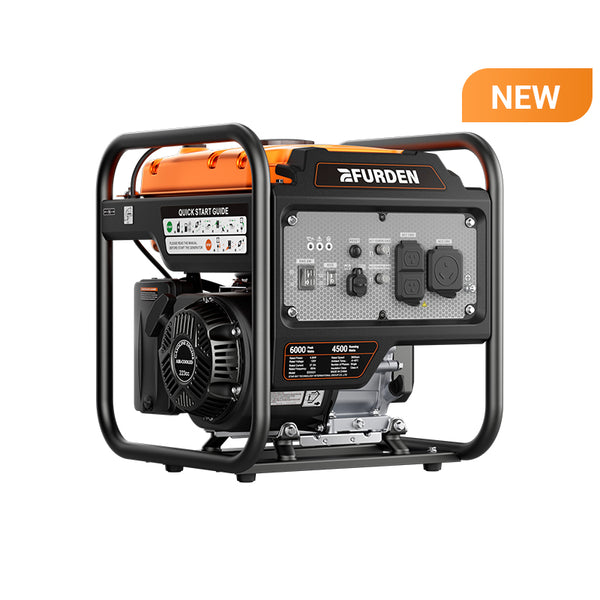
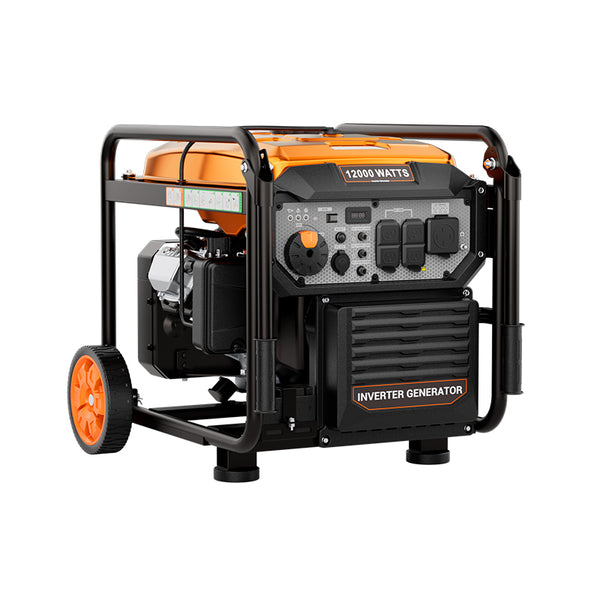
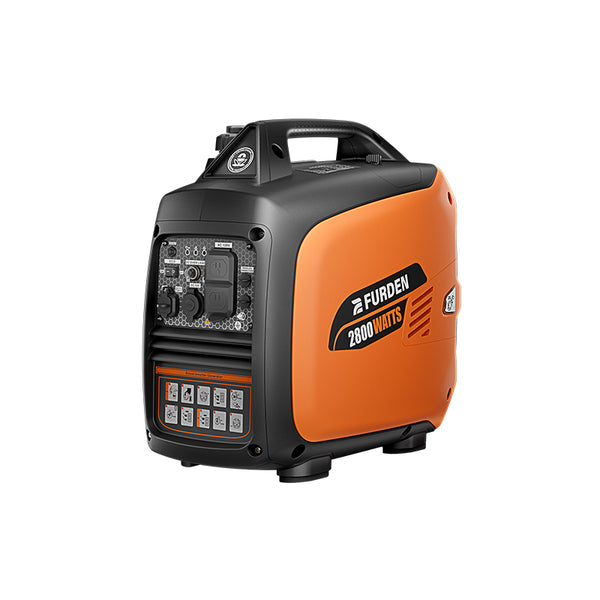
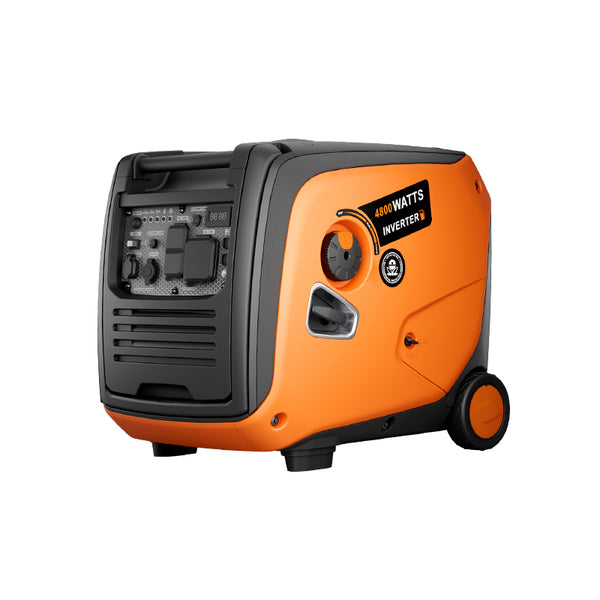
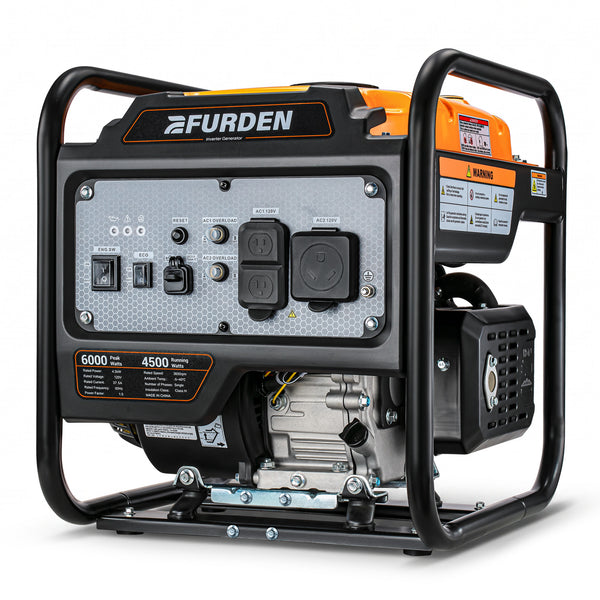
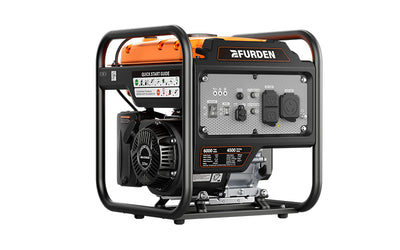
Best options : 4800 watt Efurden generator (barely enough), or 12000 watt Efurden generator (ideal choice).
oil furnace
Minimum requirement : 4400 watt generator
Recommendation : 5500W generator
Ideal choice : 6500 watt generator
Reason : Oil-fired furnaces are similar to forced-draft furnaces, but they are usually older and less efficient. They require slightly more electricity.
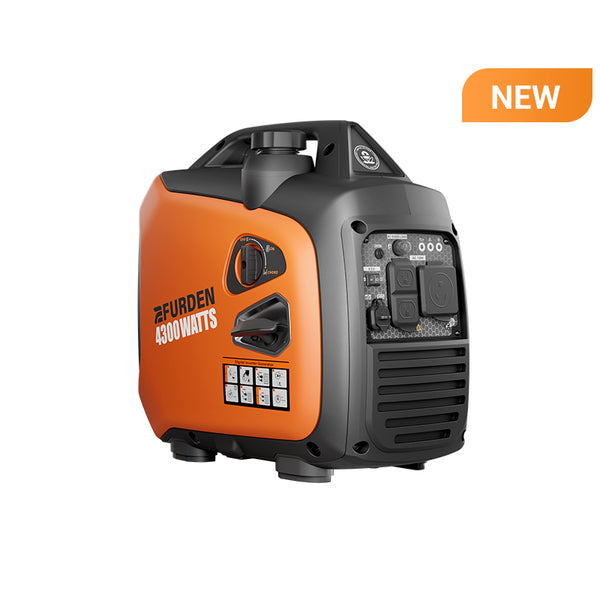
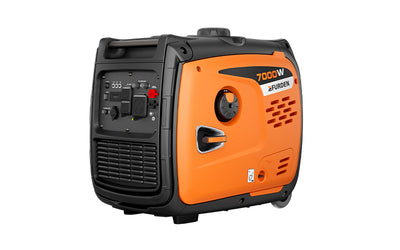
Best option : 4400W Efurden generator (minimum requirement), or 4800W Efurden generator (recommended).
Boiler system
Minimum requirement : 3000-watt generator
Recommendation : 4000W generator
Ideal choice : 4400 watt generator
Reason : The boiler system is the most efficient and consumes less energy than other heating systems.
electric heater
Minimum requirement : 8000 watt generator
Recommendation : Generators of 12000 watts or higher
Ideal choice : Generator with a power output of 15,000 watts or more
Reason : Electric heaters consume a lot of electricity, with a continuous power consumption of 5,000-15,000 watts, which most generators cannot power.
Note : Electric heaters are not suitable as backup power sources. Please consider other heating methods (such as electric heaters, fireplaces, etc.).
Manage your heating load
Once a suitable generator is available, the next step is to manage the heating load.
Priority Management
Your boiler should be your priority. But you can't run all the equipment at the same time.
Priority 1 (Always running):
• Stoves (for heating)
• Water pump (if you have a well)
Priority 2 (Run whenever possible):
• Refrigerator (for food preservation)
• Freezer (for food preservation)
• Lighting (Safety)
Priority 3 (Run only if capacity allows):
• Television (Information)
• Mobile phone charger (communication)
• Coffee machine (morale)
Priority 4 (Do not run):
• Electric heater (overpowered)
• Electric oven (too powerful)
• Clothes dryer (excessive power consumption)
Bicycle strategy
By using cyclic loads, the efficiency of the generator can be maximized.
example :
• 6 AM to 8 AM: Heating furnace + refrigeration + lighting
• 8:00 AM to 10:00 AM: Only heating and lighting will be turned on (refrigerator does not need to cool).
• 10:00 AM to 12:00 PM: Heating system + Refrigerator + Lighting
• Repeat this operation throughout the day.
This allows the refrigerator to maintain a low temperature without running continuously.
Thermostat Management
Lower the thermostat temperature to reduce the number of times the boiler circulates.
example :
• Normal temperature: 70°F (with frequent furnace circulation)
• During shutdown: 62°F (furnace circulation frequency reduced)
This can reduce electricity demand and extend fuel supply time.
Real-world heating scenarios

Let me give you a complete example.
Your situation :
• Furnace: Forced ventilation, natural gas
• Generator: 4400 watts
• Fuel: 5 gallons
• Temperature: Outdoor 20°F, Indoor 70°F
• Duration: 24-hour power outage
Your load :
• Furnace: Operating power 700 watts, starting power 2000 watts
• Refrigerator: Operating power 700 watts, starting power 1200 watts
• Bulb: 150 watts
• Phone charger: 50W
Your plan :
• Hours 1-2: Turn on the heater (2,000 watts), refrigerator (1,200 watts), and lights (150 watts) = 3,350 watts
• Hours 2-6: Heating (700 watts) + Lighting (150 watts) = 850 watts (Refrigerator off)
• Hours 6-8: Heating furnace (700W) + Refrigerator (700W) + Lighting (150W) = 1550W
• Hours 8-12: Heating (700 watts) + Lighting (150 watts) = 850 watts (Refrigerator off)
• Repeating pattern
Your fuel consumption :
• At an 850-watt load: 0.4 gallons/hour
• Power consumption: 1550 watt-hours; water consumption: 0.8 gallons per hour.
• Average: 0.6 gallons/hour
Your runtime :
• 5 gallons ÷ 0.6 gallons/hour = 8.3 hours
• Refueling is required every 8 hours.
Your strategy :
• The furnace runs continuously (it automatically cycles on and off).
• Refrigerator with a recirculating cooling system (open for 2 hours, closed for 2 hours)
• For safety reasons, please keep the lights on.
• Refuel every 8 hours
This keeps your home warm and your food safe for a 24-hour outage.
Common Mistakes
I've made these mistakes. I've seen others make them too.
Mistake 1: Underestimating starting power
Many people only look at running power. They buy a generator that's too small for the starting surge.
Mistake 2: Forgetting other loads
Your furnace isn't the only load. When you add refrigerator, lights, and other devices, you exceed your generator's capacity.
Mistake 3: Not accounting for older furnaces
Older furnaces use more power than newer ones. If your furnace is 10+ years old, add 20% to your power estimate.
Mistake 4: Choosing a heat pump without enough generator
Heat pumps are power-hungry. Many people buy a 4,400W generator for a heat pump and it's not enough.
Mistake 5: Running space heaters on the generator
Space heaters use 1,500W each. If you run one, you can't run your furnace. Don't do it.
The Bottom Line
Choosing the right generator for your furnace is critical. Your furnace is your lifeline during a winter power outage.
For most homes with forced air furnaces, a 4,400W generator is sufficient. For heat pumps, you need 6,000W+. For oil furnaces, 4,400W is usually enough.
Calculate your specific furnace requirements. Add other loads. Add a 20% safety margin. Choose a generator that exceeds your total.
And when the power goes out in winter, you'll have heat. Your family will be safe. Your home will stay warm.
That's worth the investment.
Frequently Asked Questions
Q: Can a 4,400W generator run my furnace?
A: Probably yes, if it's a forced air furnace. Most forced air furnaces need 2,000W starting and 700W running. A 4,400W generator can handle this plus other loads.
Q: What if I have a heat pump?
A: Heat pumps are more demanding. They typically need 4,500W starting. A 4,400W generator might not be enough. Consider a 6,000W+ generator.
Q: Can I run my furnace and water heater simultaneously?
A: Not typically. A water heater uses 4,000-5,000W. Your furnace uses 2,000W starting. Together, they exceed most generators.
Q: How often do I need to refuel?
A: Depends on your load and weather. At typical winter loads, a 5-gallon tank lasts 6-10 hours. Plan to refuel every 8 hours.
Q: What if my furnace won't start on the generator?
A: Your generator might be too small. Check the starting power requirement. Or your furnace might have a control board that requires specific power quality. Use an inverter generator (clean power).
Q: Should I buy a larger generator than I need?
A: Yes. A larger generator gives you flexibility. You can run more loads simultaneously. It's also more fuel-efficient at lower loads.
Q: Can I run my furnace and refrigerator simultaneously?
A: Yes, but it's tight. Furnace (2,000W starting) + refrigerator (1,200W starting) = 3,200W. A 4,400W generator can handle this.
Q: What's the difference between running and starting power?
A: Running power is what the furnace uses while operating. Starting power is the power spike when it first starts. Starting power is typically 2-3x higher.
Q: Would an inverter generator be more suitable for my gas boiler?
A: Yes. Inverter generators produce clean electricity (total harmonic distortion less than 3%), which protects your furnace's control panel. Traditional generators produce lower quality electricity that may damage electronic equipment.
Q: What if my stove is old?
A: Older gas stoves consume more electricity. Please increase your estimated electricity consumption by 20-30%. If your gas stove is over 15 years old, please consider replacing it with a more powerful generator.
Key points summary
• During winter power outages, your gas stove is the most critical load.
• Forced-draft gas furnace: Minimum power 4400 watt generator
• Heat pump: Generator with a minimum power of 6000W or higher
• Oil-fired stove: Minimum 4400 watt generator
• Boiler: Minimum 4000 watt generator
Starting power is more important
• Increase the safety margin by 20% in the calculation .
• Control the heating load (use other equipment in rotation)
• Lower the thermostat temperature to reduce the number of furnace cycles.
• Clean electricity can be obtained by using an inverter generator .
• Refuel every 8 hours during prolonged power outages.
• Develop a multi-day fuel storage plan
By choosing a generator with the appropriate power, your family can stay warm during winter power outages.