







Emergency Power Solutions: Best Portable Generators for Winter
23 Jan 2026
0 Comments
The forecast said it would be a light snow. Just a few inches.
It turned into a blizzard. Eighteen inches in twelve hours.
Then the power went out.
I was sitting in my living room with my wife and two kids. The temperature outside was dropping. Inside, it was already getting cold. The thermostat read 62 degrees and falling.
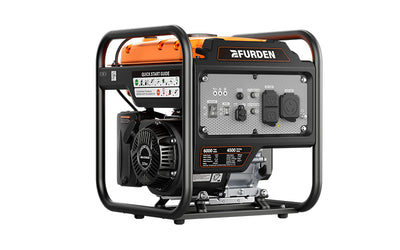
I had a generator in the garage. A 4,400W model I'd bought months earlier "just in case." I'd never used it. I wasn't even sure if it would start.
That night, I learned how critical a generator is during winter.
And I learned what happens when you're not prepared.
Why Winter Power Outages Are Different
Winter power outages aren't like summer outages.
In summer, a power outage is inconvenient. You lose air conditioning. You can't watch TV. Food in the fridge might spoil.
In winter, a power outage is dangerous.
Without heat, your home temperature drops rapidly. In a few hours, it can drop from 70 degrees to below 50 degrees. In a day, it can drop to freezing.
Freezing temperatures cause:
•Hypothermia (body temperature drops below 95°F)
•Frostbite (tissue freezes)
•Pipe freezing (water lines burst, causing thousands in damage)
•Equipment failure (furnace won't restart when power returns)
A winter power outage isn't just uncomfortable. It's life-threatening.
That's why a generator isn't optional in winter. It's essential.
What You Need to Power in Winter
During a winter power outage, your priorities are different than summer.
Essential systems:
•Furnace (heat)
•Water pump (if you have a well)
•Refrigerator (food preservation)
•Freezer (food preservation)
•Lights (safety and morale)
•Phone chargers (emergency communication)
Nice-to-have systems:
•Television (information and morale)
•Coffee maker (morale)
•Microwave (cooking)
•Space heater (supplemental heat)
Here's the power requirement for each:
|
System
|
Running Watts
|
Starting Watts
|
Notes
|
|
Furnace (forced air)
|
600-1,000W
|
1,500-2,500W
|
Biggest load
|
|
Water pump
|
1,000-2,000W
|
2,500-4,000W
|
Depends on pump size
|
|
Refrigerator
|
600-800W
|
1,200-2,000W
|
Cycles on/off
|
|
Freezer
|
600-800W
|
1,200-2,000W
|
Cycles on/off
|
|
Lights (10 bulbs)
|
150W
|
150W
|
LED is lower
|
|
Phone chargers (4)
|
50W
|
50W
|
Minimal load
|
|
Television
|
100-300W
|
100-300W
|
Depends on size
|
|
Coffee maker
|
1,000-1,500W
|
1,000-1,500W
|
Don't run with furnace
|
|
Microwave
|
1,000-1,500W
|
1,000-1,500W
|
Don't run with furnace
|
|
Space heater
|
1,500W
|
1,500W
|
Don't run with furnace
|
The key insight: Your furnace is the biggest load. It's also the most important during winter.
A furnace needs 600-1,000W to run. But it needs 1,500-2,500W to start.
This is why generator size matters in winter.
Choosing the Right Generator Size for Winter

Here's my recommendation based on what you want to power.
Minimum Setup (Essential systems only)
What you can run: Furnace + refrigerator + lights + phone chargers
Power needed:
•Furnace: 1,500W starting
•Refrigerator: 1,200W starting
•Lights: 150W
•Phone chargers: 50W
•Total: 2,900W (with safety margin)
Generator needed: 4,000W minimum
Comfortable Setup (Essential + some comfort)
What you can run: Furnace + refrigerator + freezer + lights + TV + phone chargers
Power needed:
•Furnace: 1,500W starting
•Refrigerator: 1,200W starting
•Freezer: 1,200W starting
•Lights: 150W
•TV: 200W
•Phone chargers: 50W
•Total: 4,300W (with safety margin)
Generator needed: 5,000W minimum
Full Setup (Everything)
What you can run: All systems including well pump, water heater, space heater
Power needed:
•Furnace: 1,500W starting
•Water pump: 3,000W starting
•Refrigerator: 1,200W starting
•Freezer: 1,200W starting
•Lights: 150W
•TV: 200W
•Phone chargers: 50W
•Total: 7,300W (with safety margin)
Generator needed: 8,000W minimum
Winter-Specific Generator Challenges
Winter creates unique challenges for generators.
Cold Weather Performance
Generators don't like cold. Cold air is denser than warm air. This affects engine performance.
What happens:
•Engine is harder to start in cold weather
•Oil thickens, reducing lubrication
•Battery performance decreases
•Fuel doesn't vaporize as easily
Solutions:
•Use synthetic oil (flows better in cold)
•Keep the generator in a garage or shed until needed
•Use a battery charger to keep the battery fully charged
•Use winter-grade fuel or fuel stabilizer
•Start the generator weekly in winter to keep it ready
Snow and Ice
Snow and ice create operational challenges.
What happens:
•Snow blocks air vents (engine overheats)
•Ice forms on the generator (electrical hazard)
•Wet snow melts and causes electrical shorts
•Exhaust freezes (can block the muffler)
Solutions:
•Clear snow from the generator regularly
•Place the generator under a canopy or shelter (but ensure ventilation)
•Keep the generator dry
•Don't let snow accumulate on the exhaust
•Never use the generator in heavy snow or rain
Fuel Consumption in Winter
Generators use more fuel in winter. Cold engines work harder.
Fuel consumption:
•Summer: 1.5-2 gallons per hour at 50% load
•Winter: 2-2.5 gallons per hour at 50% load
Planning:
•A 5-gallon tank lasts 2-3 hours in winter
•A 10-gallon tank lasts 4-5 hours in winter
•Plan for 2-3 days of fuel storage
Real-World Winter Scenario

Let me give you a real example.
It's January. A blizzard hits. Power goes out.
Your situation:
•Temperature outside: 15°F
•Temperature inside: 70°F
•Furnace: 1,000W running, 2,000W starting
•Refrigerator: 700W running, 1,500W starting
•Lights: 150W
•Phone chargers: 50W
What you need:
•Starting power: 2,000W (furnace) + 1,500W (refrigerator) = 3,500W
•Running power: 1,000W + 700W + 150W + 50W = 1,900W
Generator needed: 4,400W minimum
What happens:
•You start the generator
•Furnace starts (uses 2,000W for 2 seconds)
•Refrigerator starts (uses 1,500W for 1 second)
•Both settle into running mode (1,700W total)
•You have 2,700W available for other loads
Runtime:
•4,400W generator at 1,900W load = 23 hours per 5-gallon tank
•4,400W generator at 3,500W load = 14 hours per 5-gallon tank
Your plan:
•Keep 15 gallons of fuel stored
•Run the generator 12 hours per day
•Use fuel strategically (furnace on, other loads off during night)
This keeps your home warm and your food safe until power is restored.
Winter Generator Safety
Winter adds safety concerns.
Carbon Monoxide Risk
CO is more dangerous in winter because:
•You're more likely to run the generator continuously
•You might be tempted to bring it inside for warmth
•You might place it too close to windows/doors
Safety rules:
•Never run the generator indoors
•Place it 20+ feet from windows, doors, vents
•Install battery-powered CO detectors in your home
•Check CO levels regularly
Electrical Hazards
Snow and ice create electrical risks.
Safety rules:
•Keep the generator dry
•Use outdoor-rated extension cords
•Don't touch the generator with wet hands
•Ensure proper grounding
•Keep children and pets away
Fuel Storage
Winter fuel storage is different.
Safety rules:
•Store fuel in approved containers (red for gasoline)
•Store in a cool, dry location away from the generator
•Use fuel stabilizer for long-term storage
•Rotate fuel (use old fuel first)
•Keep fuel away from heat sources
Maintenance Before Winter
Prepare your generator before winter arrives.
Fall maintenance checklist:
•Change the oil (use synthetic winter-grade oil)
•Replace the air filter
•Replace the spark plug
•Drain old fuel or add fuel stabilizer
•Test the generator (make sure it starts)
•Check the battery
•Inspect for damage or leaks
•Clean the fuel filter
•Lubricate moving parts
Monthly winter maintenance:
•Start the generator weekly (even if you don't need it)
•Check the oil level
•Check the fuel level
•Inspect for damage
•Test the battery
The Bottom Line
Winter power outages are dangerous. A generator isn't optional. It's essential.
Choose a generator that can power your furnace and essential systems. For most homes, a 4,400W generator is sufficient. For larger homes or well pumps, a 5,500W+ generator is better.
Prepare before winter arrives. Maintain your generator. Store fuel safely. Follow safety rules.
And when the blizzard hits and the power goes out, you'll be ready.
Your family's safety depends on it.
Frequently Asked Questions
Q: What size generator do I need for my furnace?
A: Most furnaces need 1,500-2,500W starting power. A 4,400W generator can handle most furnaces plus other loads.
Q: Can I run my furnace and water heater simultaneously?
A: Not typically. A water heater uses 4,000-5,000W. Your furnace uses 1,500-2,500W. Together, they exceed most generators. Run them separately.
Q: How long will a generator run on a tank of fuel?
A: Depends on the load and weather. At 50% load in winter, a 5-gallon tank lasts 2-3 hours. At 25% load, it lasts 4-6 hours.
Q: Can I run a generator in the snow?
A: Not in heavy snow. Light snow is okay if you clear it regularly. Heavy snow blocks vents and creates electrical hazards.
Q: What's the best fuel for winter?
A: Use winter-grade fuel or add fuel stabilizer. Synthetic oil is better than conventional in cold weather.
Q: Should I store my generator inside in winter?
A: No. Store it in a garage or shed, but never run it indoors. Always run it outside.
Q: How often should I start my generator in winter?
A: Weekly. This keeps the engine lubricated and the battery charged.
Q: What if my generator won't start in cold weather?
A: Check the oil (it thickens in cold), check the battery (it weakens), and try starting it in a warmer location. Use a block heater if available.
Q: Can I use an indoor extension cord with my generator?
A: No. Use outdoor-rated cords only. Indoor cords aren't rated for outdoor conditions.
Q: What's the best way to store fuel for winter?
A: Use approved red containers. Store in a cool, dry location away from the generator. Use fuel stabilizer for long-term storage.
Key Takeaways
•Winter power outages are dangerous and life-threatening
•A generator is essential, not optional
•Most homes need 4,400W+ for winter backup
•Furnace is the biggest load (1,500-2,500W starting)
•Cold weather affects generator performance
•Prepare before winter arrives
•Maintain your generator monthly
•Store fuel safely
•Follow safety rules (CO, electrical, fuel)
•Start your generator weekly
•Never run it indoors
•Keep 15+ gallons of fuel stored
A generator keeps your family warm and safe during winter power outages. Choose the right size, maintain it properly, and you'll be ready for any emergency.