







Heating Your Home During a Winter Blackout - Furnace Power Requirements
28 Jan 2026
0 Comments
A moment that terrifies every homeowner
It's 3 a.m. The outside temperature is -10 degrees Fahrenheit. Your power is out.
The heater was off. The room was silent except for the sound of the wind.
You know the indoor temperature will drop rapidly. In 2 hours, it will drop to 55 degrees Fahrenheit. In 4 hours, it will drop to 45 degrees Fahrenheit. In 8 hours, the pipes will start to freeze.
At this point, you might realize: "Can my generator power my heater?"
The answer is usually yes. But only if you are fully prepared.
Find out how much electricity your furnace needs.
The mistake most people make is that they think the power required to run a furnace is the same as the power required to start it.
That's not the case.
Starting power and running power
When your boiler starts up, the blower motor draws in a huge current within 1-2 seconds. This is called startup power or surge power .
Then it stabilizes and reaches a stable operating power .
For example: forced ventilation gas furnace
• Starting power: 1500 watts (lasts 1-2 seconds)
• Operating power: 600W (continuous)
Your generator must be able to handle the starting power. If it cannot, it will stop working.
Common furnace types and their power requirements
|
Furnace type
|
Starting power
|
Operating power
|
Optimal generator size
|
|
Forced ventilation (gas)
|
1200-2000 watts
|
600-800 watts
|
3000 watts and above
|
|
heat pump
|
3500-5000 watts
|
1500-2500 watts
|
5000 watts and above
|
|
oil furnace
|
2000-3000 watts
|
800-1200 watts
|
3500 watts and above
|
|
Hydraulic boiler
|
1500-2500 watts
|
600-1000 watts
|
3000 watts and above
|
|
electric furnace
|
5,000-15,000 watts
|
3000-10000 watts
|
unrealistic*
|
The electric heater consumes too much electricity and the generator cannot power it. Please use an electric heater instead (but only one can be used at a time).
Why are heat pumps so difficult to manage?
Heat pumps require more electricity than gas boilers. They also have a "defrost cycle" that activates in cold weather, temporarily consuming extra electricity.
If you have a heat pump in your home, you will need a more powerful generator (at least 5000 watts) to meet the power requirements for startup and operation.
Calculate your exact electricity consumption
Don't rely on your gut feeling. Use our generator power calculator to accurately calculate the power you need.
Please enter the following :
1. Your furnace type (forced draft, heat pump, oil-fired, boiler)
2. Your furnace model (check the nameplate on the equipment)
3. Other loads: refrigerators, lighting equipment, water pumps, medical equipment
The calculator will tell you:
• Minimum generator size (to meet starting power requirements)
• Recommended generator capacity (with a safety margin)
• Estimated fuel consumption for 24/48/72 hours
Calculation example :
• Forced draft furnace: 1500 watts starting power, 700 watts operating power
• Refrigerator: 150 watts
• Bulbs (5 LED bulbs): 50W
• Water pump: Starting power 800W, operating power 400W
• Total starting power : 1500 + 800 = 2300 watts
• Minimum generator power : 2300 watts
• Recommended generator power : 2,300 × 1.2 = 2,760W (rounded up to 3,000W)
How to choose the right generator for your furnace

Depending on your furnace type:
Forced-draft gas stove (most common)
Minimum requirement : 2500 watt generator
Recommendation : 3500-4000 watt generator
A 3000-4000 watt generator can easily power your stove, refrigerator, lights, and water pump.
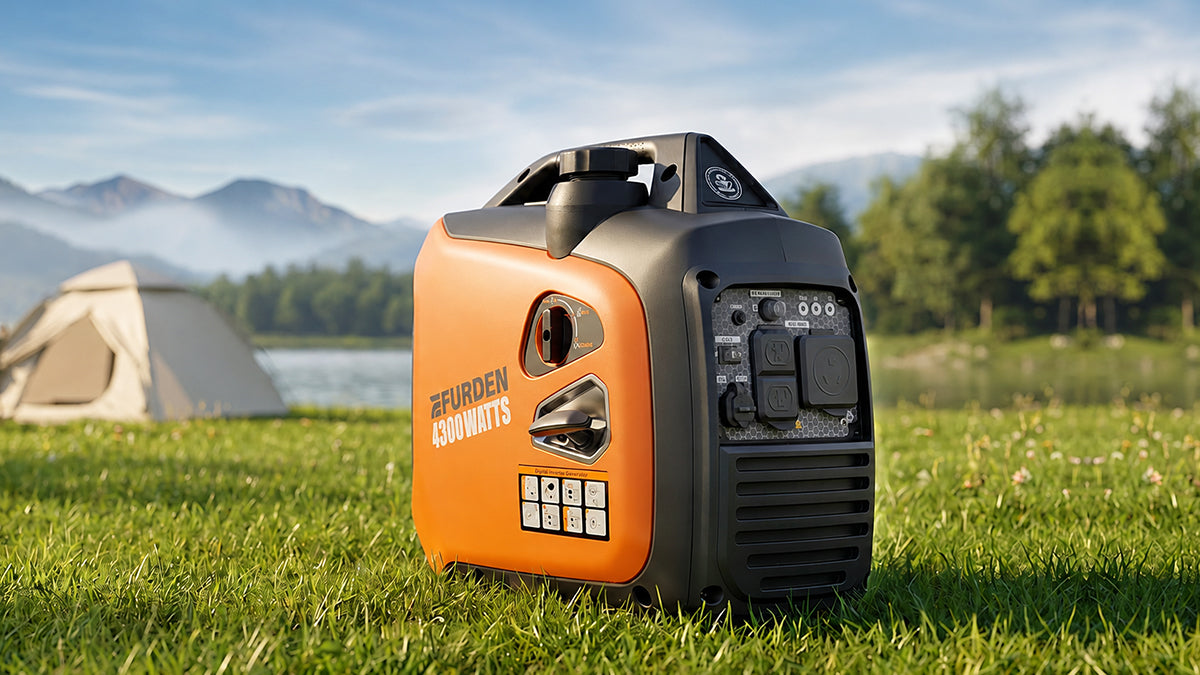
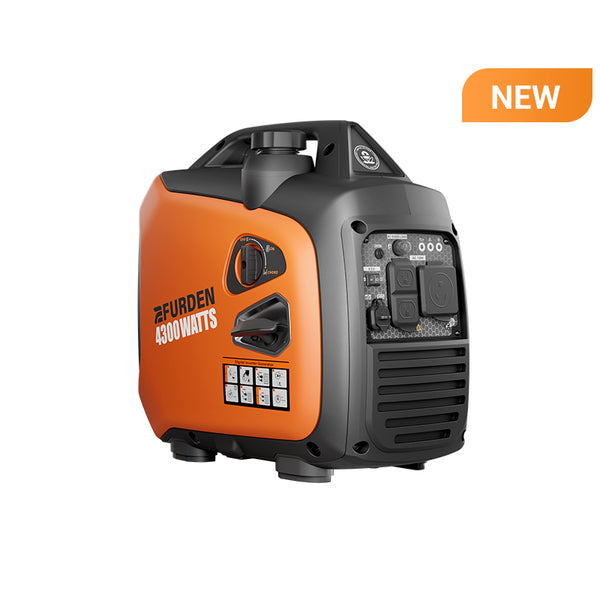
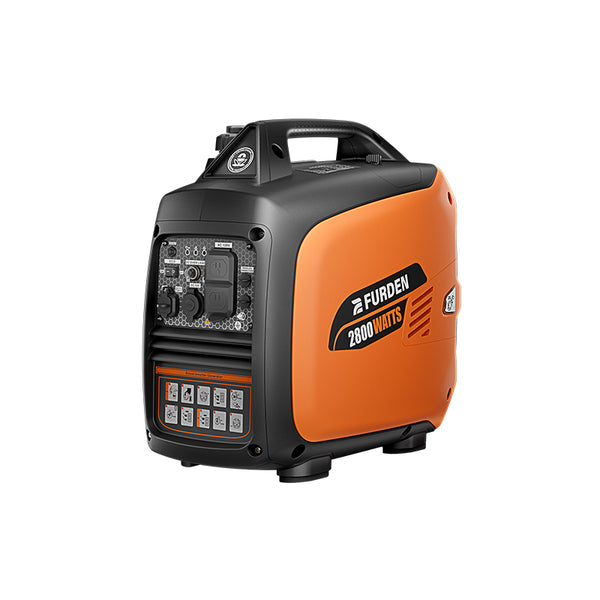
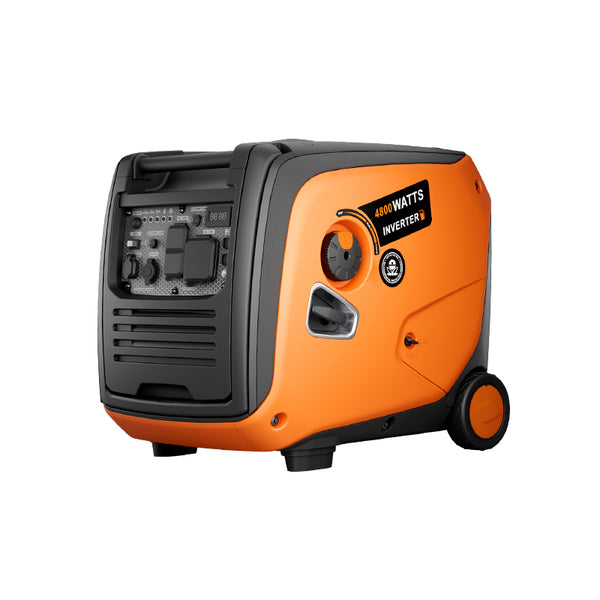
Efurden's 4400W inverter generator is perfect for this situation. It not only provides enough power for your furnace and other necessary loads, but also has spare capacity.
heat pump
Minimum requirement : 4500 watt generator
Recommendation : 5000-6000 watt generator
Heat pumps consume a lot of electricity, generator power cannot be reduced, and defrosting cycles require sufficient power reserves.
oil furnace
Minimum requirement : 3000-watt generator
Recommendation : 3500-4000 watt generator
The oil-fired stove requires an electric fuel pump. Please ensure your generator can start both the fuel pump and the blower motor simultaneously.
Boiler (hydraulic heating)
Minimum requirement : 2500 watt generator
Recommendation : 3000-3500 watt generator
Boilers consume less electricity than forced ventilation systems, but water pumps still require sufficient starting power.
Load management during power outages
You don't need to run all your devices simultaneously. Intelligent load management keeps the room warm while saving fuel.
Priority system
Priority 1 - Must run :
• Stove (obvious)
• Water pump (if you have a well)
Priority 2 - Should run :
• Refrigerator (to prevent food waste)
• Basic lighting (1-2 rooms)
• Mobile phone charging (emergency communication)
Priority 3 - Can wait :
• TV, computer, spare lights
• Coffee machine, microwave oven
• Washing machine/dryer
Furnace circulation strategy
Your heater doesn't run continuously; instead, it cycles on and off based on the temperature.
During winter power outages :
1. Set the thermostat to 65-68°F (lower than normal temperature).
2. Your furnace will cycle fewer times.
3. This can reduce fuel consumption by 20-30%.
4. Your house is warm enough.
For example , under normal circumstances, a gas stove cycles 4-5 times per hour. If the thermostat setting is lowered, it cycles 2-3 times per hour. Comfort remains the same, but fuel consumption is reduced.
Heating scenarios in the real world

Scenario 1: 24-hour power outage (forced ventilation heating boiler)
Configuration : 4400-watt generator, forced draft furnace, 30-gallon fuel
0-12 hours : Heating furnace + refrigerator + lighting + water pump = approximately 1200 watts on average
• The furnace cycles 3 times per hour, each time for 5 minutes = 15 minutes of operation per hour.
• Actual load: 700W × 0.25 + 150W + 50W + 400W = approximately 900W (average)
• Fuel consumption: 4.5 gallons
Hours 12-24 : Same load pattern
• Fuel consumption: 4.5 gallons
Total fuel required : 9 gallons
Remaining fuel : 21 gallons
Results : The indoor temperature remained at a comfortable 66 degrees Fahrenheit (approximately 19 degrees Celsius). Fuel was sufficient.
Scenario 2: 48-hour power outage (heat pump)
Configuration : 5500 watt generator, heat pump, 50 gallons of fuel
0-24 hours : Heat pump + refrigerator + lighting = approximately 2000 watts on average
• The heat pump runs 4 times per hour, for 10 minutes each time, for a total of 40 minutes per hour.
• Actual load: 1800W × 0.67 + 150W + 50W = approximately 1350W (average)
• Fuel consumption: 6.75 gallons
Hours 24-48 : Same load pattern
• Fuel consumption: 6.75 gallons
24-hour refueling : 15 gallons
Total fuel consumed : 13.5 gallons
Remaining fuel : 51.5 gallons
Results : Indoor temperature remained at 68°F (approximately 20°C). Defrosting cycle functioned normally. Safe for 48 hours.
Furnace operation safety instructions during power outages
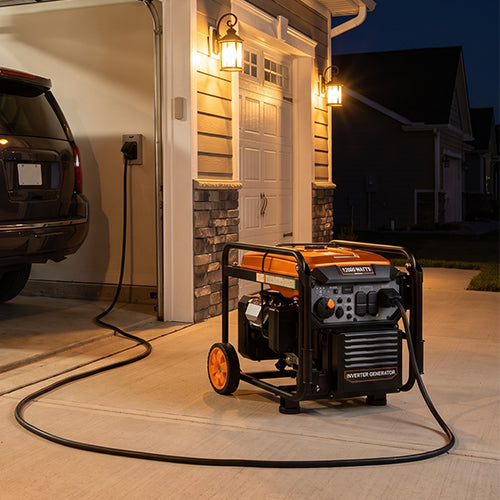
Never run a generator indoors.
Carbon monoxide is fatal. Start the generator:
• Outdoors, at least 20 feet away from doors and windows
• Windows away from neighbors
• The exhaust vent should be facing away from your home.
Ensure good ventilation
Your heater needs air to operate. During a power outage:
• Do not seal all doors and windows.
• Leave at least one window slightly open to allow for air circulation.
• Your stove will draw in fresh air from the outside.
Monitoring carbon monoxide
If you have a battery-powered carbon monoxide detector, please keep it on. If not, please purchase one immediately. Carbon monoxide poisoning is silent yet deadly.
Check your furnace filter
A clogged filter reduces airflow, increasing the load on the boiler. Please check the filter:
• Before winter
• Power outages will occur every two weeks.
Replace it when it gets dirty .
Alternative heating option
Your generator may not be sufficient to handle extreme cold weather. Please prepare a backup plan:
Space heater (limited use)
Each heater consumes 750-1500 watts of electricity. If your generator is powerful enough, you can run one heater simultaneously.
Never run two electric heaters at the same time. Doing so will overload most generators.
fireplace or wood-burning stove
If you have a wood-burning stove, use it. Wood-burning heating doesn't require electricity.
Kerosene heater (outdoor use only)
Portable kerosene heaters can provide supplemental heating. For outdoor or well-ventilated areas only. Never use indoors—there is a risk of carbon monoxide poisoning.
Heat insulation and weatherproofing
During a power outage, the focus should be on keeping warm:
• Close unused rooms
• Hang blankets on the windows
• Seal the gaps around doors and windows
• Move the family to live in a central room
Next steps
2. Select the appropriate generator based on your furnace type .
3. Read "How to Prepare Your Generator for Winter" to learn about the maintenance steps.
4. Develop a power outage response strategy and select a 24-hour, 48-hour, or 72-hour power outage plan.
5. Test your device before winter arrives .
A properly powered generator can ensure your family stays warm, safe, and comfortable during winter power outages. Don't rely on luck.