







Camping Generator Guide: Power Your Outdoor Adventures with Confidence
16 Jan 2026
0 Comments
I'll be honest: my first camping trip with a generator was a disaster.
I borrowed my brother-in-law's 8000W traditional generator. It was loud. Really loud. So loud that the park ranger came by at 7 AM to tell me I was violating noise restrictions. The fuel consumption was brutal—I was refueling every 6 hours. And the thing weighed so much that getting it in and out of my truck was a two-person job.
That was five years ago. Since then, I've learned what actually works for camping.
The right generator transforms camping. You can charge your devices. You can run a small refrigerator or cooler. You can have lights at night. You can even run a small space heater if you're camping in cool weather. But the wrong generator ruins the experience—it's loud, it's heavy, it's expensive to fuel, and it annoys everyone around you.
Let me walk you through what I've learned.
The Camping Generator Reality
Here's what most people get wrong: they think they need a huge generator for camping. They don't.
Camping is different from home backup power. You're not trying to run your whole life. You're trying to power a few essential devices and maybe some comfort items. That's a completely different calculation.
Most camping scenarios need 2,000-4,400 watts. Not 8,000. Not 6,500. Just enough to handle what you actually want to run. The problem is figuring out what you actually want to run. And that depends on what kind of camping you're doing.
What Kind of Camping Are You Doing?
This matters more than you'd think. Your power needs are completely different depending on whether you're car camping, RV camping, or tent camping.
Car Camping (Most Common)

You drive to a campground. You set up a tent or use a cabin. You park your car nearby.
•Your Power Needs: Phone and laptop charging, LED camping lights, a small portable refrigerator or cooler, and perhaps a portable fan or space heater.
•Power Needed: Typically 1,500-2,500W.
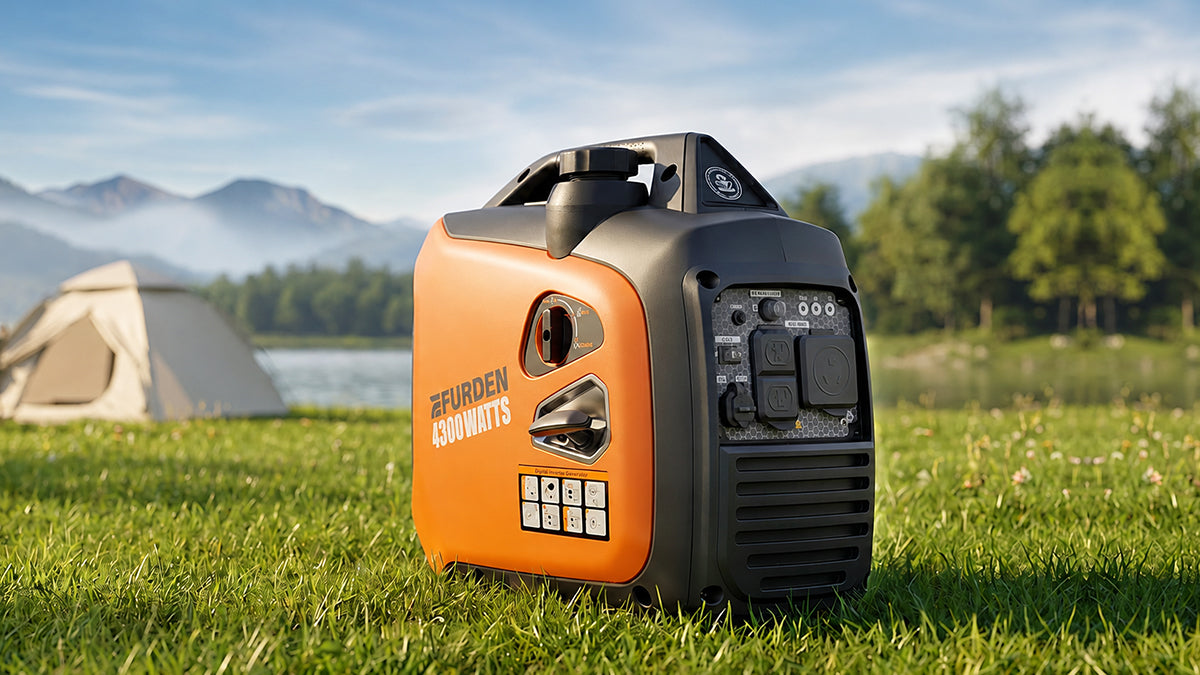
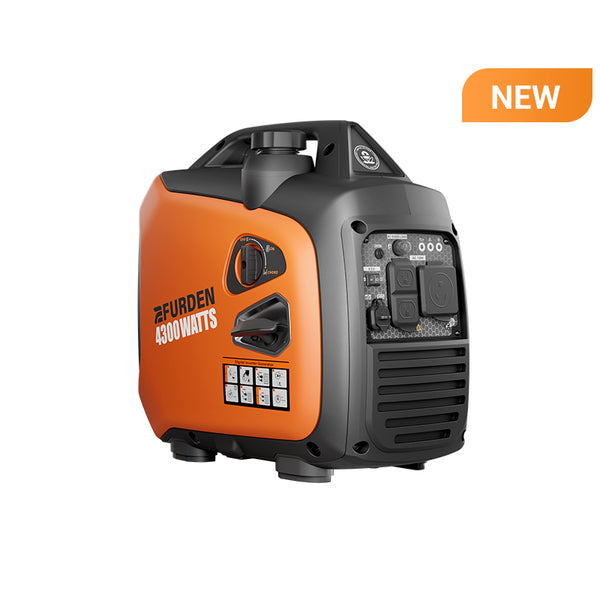
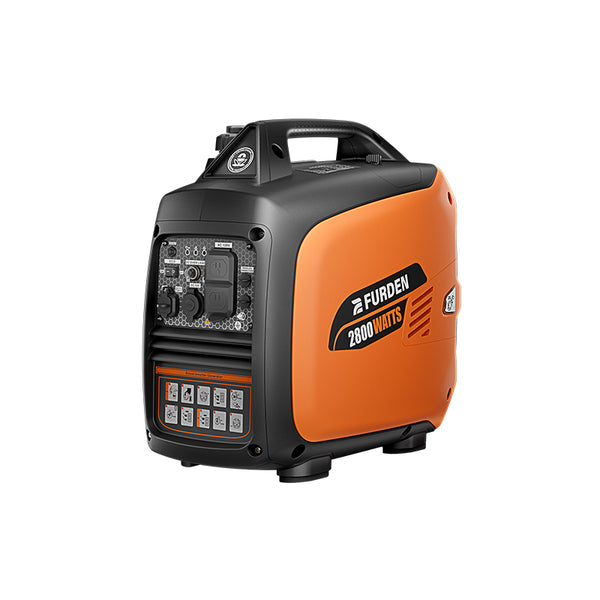
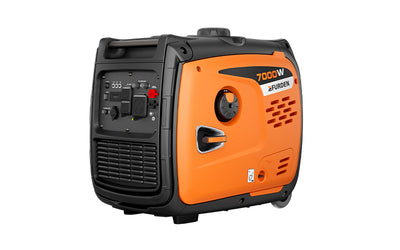
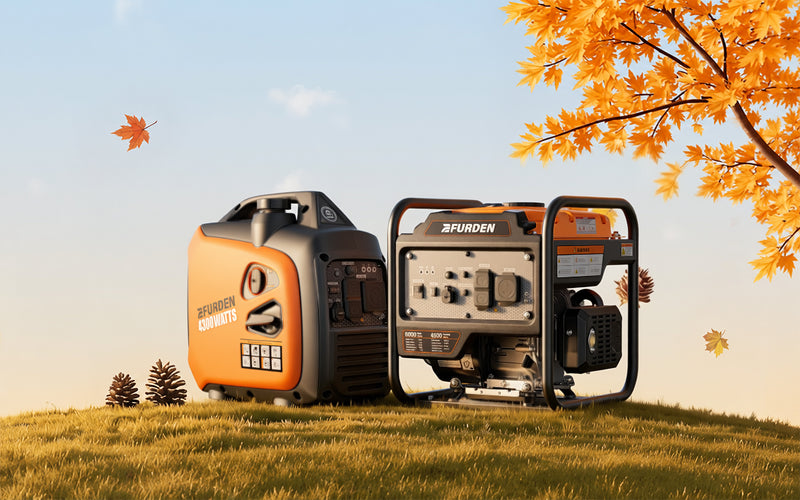
•Generator Recommendation: For these needs, a 2,000-2,500W model is ideal. It's quiet, light, and fuel-efficient, ensuring your essentials are powered without hassle. For a reliable and quiet solution in this range, consider the Efurden 2500W Portable Quiet Gas Inverter Generator.
RV Camping

You have an RV with built-in systems and want to run AC, a water pump, fridge, and other amenities.
•Your Power Needs: RV air conditioner (3,500-5,000W), RV refrigerator (600W), water pump (500W), lights, entertainment, and device charging.
•Power Needed: Typically 4,000-5,500W.
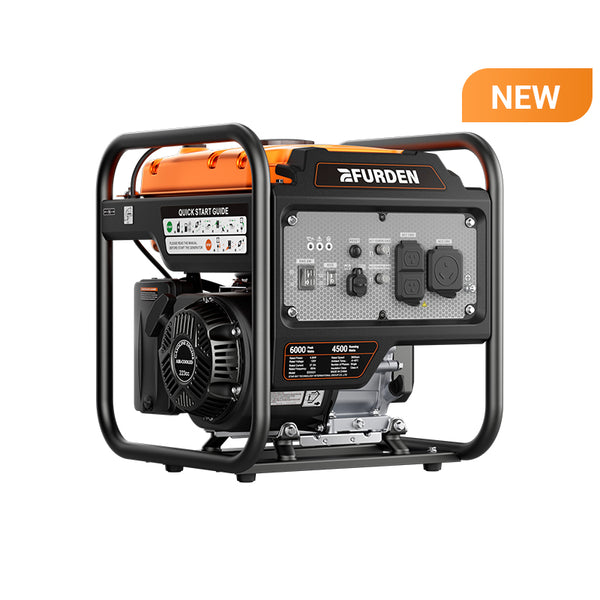
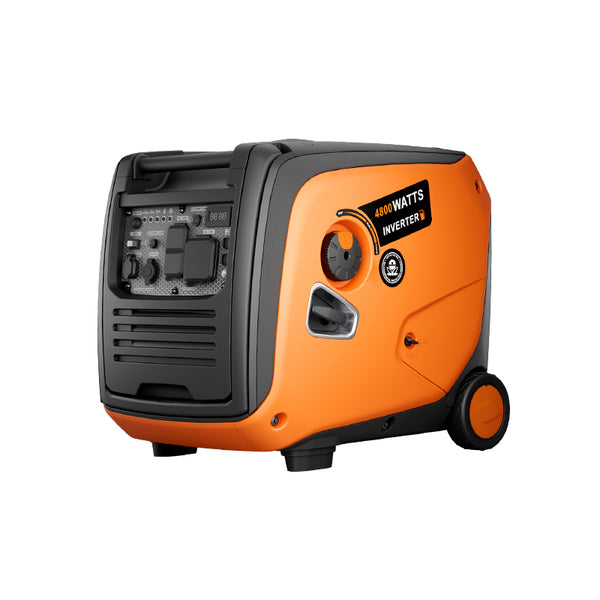
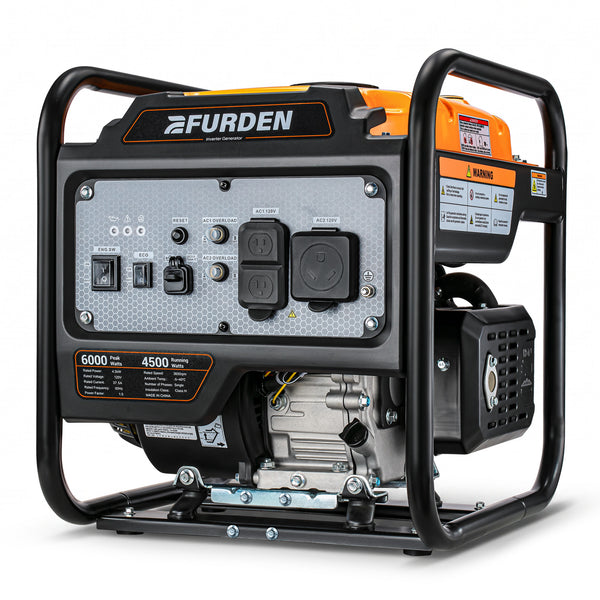
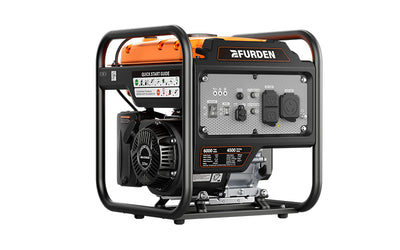
•Generator Recommendation: To comfortably run AC and other systems, a 4,400-5,500W model is essential. The Efurden 4800W Portable Quiet Gas Inverter Generator offers excellent quiet performance for this, while the Efurden 4000W/4400W Portable Gas Inverter Generator (Open Frame) provides a robust and cost-effective open-frame option.
Tent Camping (Minimal)

You're roughing it with minimal electricity needs, focusing on basics.
•Your Power Needs: Phone charging, an LED flashlight or lantern, maybe a portable speaker, and a USB power bank.
•Power Needed: Typically 500-1,000W.
•Generator Recommendation: A small, lightweight 1,000-2,000W model is perfect. It's quiet and fuel-efficient for minimal power draw. While the Efurden 2500W Portable Quiet Gas Inverter Generator might offer more power than strictly necessary, its quiet operation and efficiency make it a versatile choice for those who might expand their needs later.
What Devices Actually Draw Power?

Let me give you the real numbers for camping devices. Not theoretical numbers. Actual numbers from people using them.
|
Device
|
Wattage
|
Notes
|
|
Phone charger
|
10-30W
|
Minimal power draw
|
|
Laptop charger
|
50-100W
|
Depends on laptop size
|
|
USB power bank
|
20-50W
|
When charging
|
|
LED camping light
|
5-20W
|
Very efficient
|
|
Portable fan
|
30-100W
|
Small camping fan
|
|
Portable refrigerator
|
50-100W
|
Running, not starting
|
|
Cooler with electric pump
|
40-80W
|
Keeps drinks cold
|
|
Portable space heater
|
750-1,500W
|
High power draw
|
|
Small TV
|
30-100W
|
Portable/battery-powered
|
|
Portable speaker
|
10-50W
|
Bluetooth speaker
|
|
Electric kettle
|
1,000-1,500W
|
High power draw
|
|
Portable air mattress pump
|
100-200W
|
Temporary use
|
|
Laptop/tablet
|
30-100W
|
When running
|
|
Headlamp/flashlight
|
5-15W
|
LED is efficient
|
Key insight: Most camping devices draw minimal power. High-power devices (space heater, AC) require bigger generators.
Real Camping Scenarios
Let me show you what actually happens when you camp with a generator.
Scenario 1: The Weekend Car Campers (Family of Four)
•Simultaneous Power Draw: Phones charging (60W), Refrigerator running (80W), LED lights (20W), Portable speaker (20W).
•Total: 180W
•Peak Power Draw: Laptop charger (100W) + Refrigerator (80W) + Lights (20W) = 200W.
•Generator Needed: A 1,000-1,500W model is sufficient. For this family, the Efurden 2500W Portable Quiet Gas Inverter Generator provides ample power with quiet operation, offering flexibility for future needs without being excessively large.
Scenario 2: The RV Campers (Want AC)
•Simultaneous Power Draw: AC running (3,500W), Refrigerator (600W), Water pump (500W), Lights (200W).
•Total: 4,800W
•Peak Power Draw (AC starting): AC surge (5,000W) + Other devices (1,000W) = 6,000W.
•Generator Needed: A 4,400-5,500W model is crucial. The Efurden 4800W Portable Quiet Gas Inverter Generator is perfectly suited for this, handling AC and other RV systems with ease. For those requiring even more power or a robust open-frame design, the Efurden 4000W/4400W Portable Gas Inverter Generator (Open Frame) is another excellent choice.
Scenario 3: The Minimalist Tent Campers
•Simultaneous Power Draw: Phone charging (20W), Power bank charging (30W), Speaker (20W).
•Total: 70W
•Generator Needed: A 500-1,000W model is sufficient. For minimalists, the Efurden 2500W Portable Quiet Gas Inverter Generator offers more than enough power for basic needs, with the added benefit of quiet operation, making it a comfortable choice even for light use.
The Portability Factor
Generator weight matters more than you'd think.
|
Generator Size
|
Weight
|
Portability
|
|
1,000W
|
25-35 lbs
|
Easy to carry
|
|
2,000W
|
40-50 lbs
|
Need a dolly
|
|
2,500W
|
45-55 lbs
|
Need a dolly
|
|
4,400W
|
50-60 lbs
|
Need a dolly + help
|
|
6,500W
|
80-100 lbs
|
Difficult to move
|
Portability factors:
•Fuel capacity: Smaller = more frequent refueling
•Noise: Smaller = quieter for campgrounds
•Fuel consumption: Smaller = cheaper to run
•Storage: Smaller = fits more vehicles
Sweet spot for camping: 2,000-2,500W
Light enough to move, quiet enough for campgrounds, fuel-efficient. For RV camping with AC, a 4,400W generator is better.
Fuel Planning for Camping
Here's where people make another mistake: they don't plan for fuel consumption.
A 2,500W generator at 50% load runs 8-10 hours per tank. At 75% load, 5-6 hours.
Weekend trip example: 4 hours Friday + 6 hours Saturday + 4 hours Sunday = 14 hours total. You need 2-3 tanks.
Fuel planning:
•Know your generator's runtime
•Calculate expected usage
•Bring extra fuel in approved containers
•Plan refueling stops
Efurden advantage: 3.8-gallon tank runs 10-14 hours at 50% load. Weekend trip needs one refuel; week-long trip needs multiple.
Campground Noise Restrictions
Here's something that catches people off guard: many campgrounds have noise restrictions.
Some allow generators only during certain hours (typically 9 AM to 9 PM). Some have decibel limits (usually 75-80 dB). Some don't allow generators at all.
Before you buy a generator, check your campground's rules.
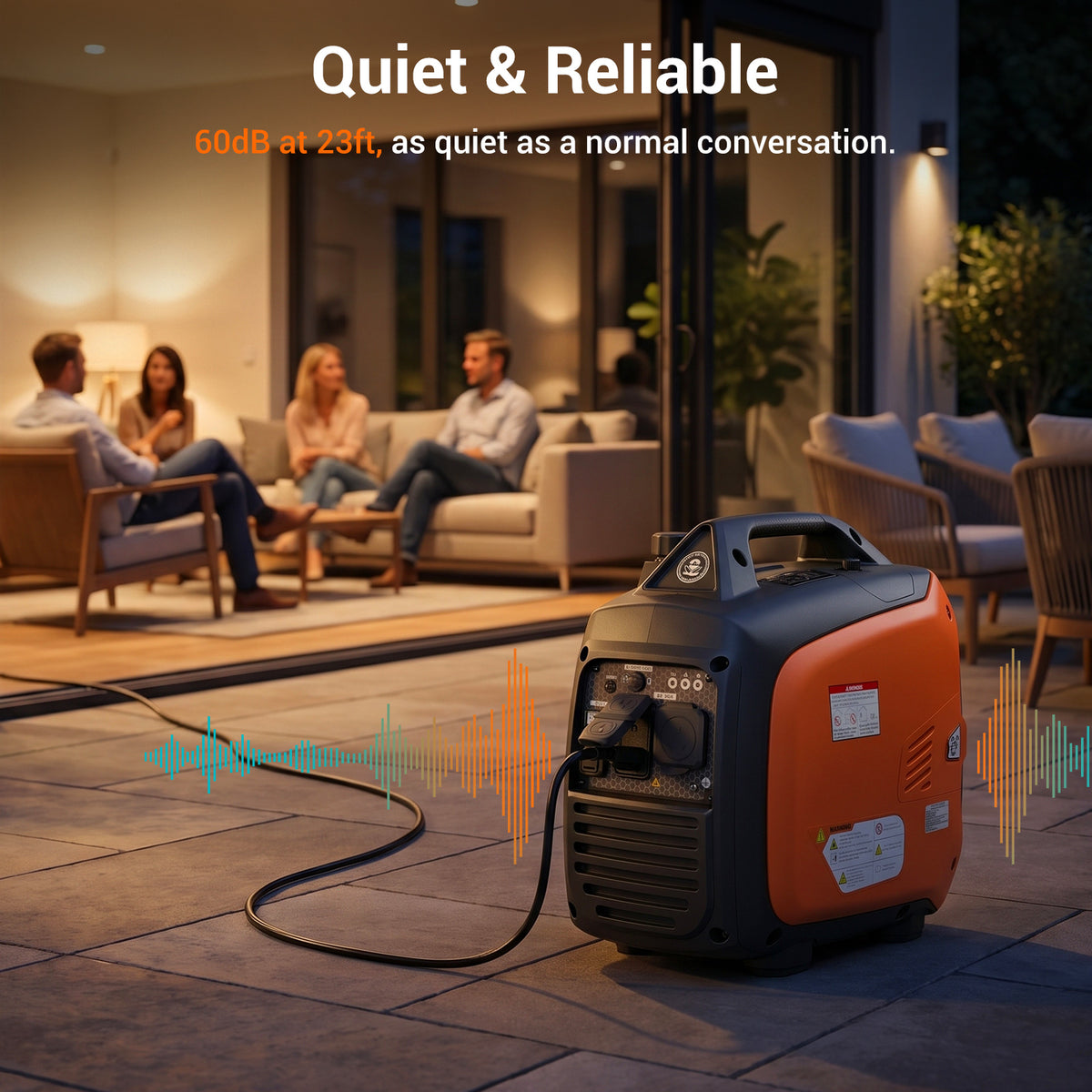
Traditional generators are loud. 95+ decibels. That's as loud as a lawnmower. Many campgrounds won't allow them.
Inverter generators are quieter. 75-80 decibels. That's about as loud as a vacuum cleaner. Most campgrounds allow them.
This is a major advantage of inverter generators. You can use them without violating campground rules.
Efurden generators run at 75-80 dB—quiet enough for most campgrounds.
Common Camping Generator Mistakes
After talking to dozens of campers, here are the mistakes I see repeatedly.
Common mistakes:
1.Buying too big (overkill, heavy, loud)
2.Not calculating power needs (guessing)
3.Forgetting noise restrictions (traditional generators too loud)
4.Not planning fuel (running out mid-trip)
5.Ignoring safety (too close to tent = CO risk)
6.Not maintaining (won't start when needed)
The Efurden Advantage for Camping
Key advantage: Quiet (75-80 dB), fuel-efficient, reliable. Perfect for comfortable camping without annoying neighbors.
The Bottom Line
A camping generator transforms your experience—if you choose the right size.
Most campers need 2,000-4,400 watts. Calculate your needs. Check campground rules. Choose a quiet, fuel-efficient generator. Maintain it properly.
Frequently Asked Questions
Q: What size generator do I need for camping?
A: Depends on what you want to power. Car camping with a refrigerator? 2,000-2,500W. RV camping with AC? 4,400-5,500W. Minimal tent camping? 1,000-1,500W.
Q: Can I run an air conditioner on a camping generator?
A: Yes, but you need at least 4,400W. An AC draws 3,500-5,000W. A 4,400W generator can run it, but not much else simultaneously.
Q: How long does a generator run on one tank?
A: Depends on the generator and load. A 2,500W generator at 50% load runs 8-10 hours per tank. At 75% load, 5-6 hours.
Q: Is it safe to run a generator in my tent?
A: No. Never run a generator inside your tent or RV. Carbon monoxide is deadly. Keep it outside, at least 15 feet from sleeping areas.
Q: What's the quietest camping generator?
A: Inverter generators are quieter than traditional generators. The Efurden 4400W runs at about 78 dB at 1/4 load. That's quiet enough for most campgrounds.
Q: Can I use a camping generator for home backup power?
A: Yes. A 4,400W camping generator can power essential home systems during an outage. But it's not ideal for long-term home backup.
Q: How do I store a generator when I'm not using it?
A: Drain the fuel (or use fuel stabilizer). Store it in a dry place. Run it monthly to keep it healthy. Maintain it regularly.
Q: Do I need a transfer switch for camping?
A: No. You're using extension cords to power individual devices. A transfer switch is for home backup power.
Q: What's the difference between a camping generator and a home backup generator?
A: Camping generators prioritize portability and quiet operation. Home backup generators prioritize power and runtime. The Efurden 4400W works well for both.
Q: Can I use a generator at all campgrounds?
A: No. Some campgrounds have noise restrictions or don't allow generators. Check the rules before you go.
Key Takeaways
•Your actual camping power needs are often less than you think (2,000-4,400W for most scenarios).
•Inverter generators offer quiet operation and clean power, ideal for sensitive electronics and campgrounds.
•Always calculate your specific device draw and plan for fuel consumption.
•Prioritize safety by placing generators correctly and never running them indoors.