









What Are the Downsides of Inverter Generators? Honest Review
02 Mar 2026
3 Comments
Look, we've been talking a lot about why inverter generators are great. The clean power, the fuel efficiency, the quiet operation—it's all real. But here's the thing: they're not perfect. No product is. And if you're thinking about dropping a few hundred or even $1,000+ on a generator, you deserve to know what you're actually getting into.
I've spent the last few months talking to people who own inverter generators. Some love them. Some regret the purchase. And honestly? The complaints I hear most often aren't what the marketing materials warn you about. They're the practical, real-world issues that nobody mentions until you've already bought the thing.
So let's talk about the actual downsides. Not the theoretical stuff—the real problems people run into.
The Price Shock (and the Efurden Exception)
Let’s start with the elephant in the room: traditionally, inverter generators cost a lot more. It’s an industry rule that’s been true for decades. You can grab a loud, old-school 3000W-4000W portable generator for $350–$450. But if you want a decent inverter with the same power? You’re usually looking at $800 to $1,200.
For many homeowners, that $400+ "tech tax" feels like too much to pay just for some peace and quiet.
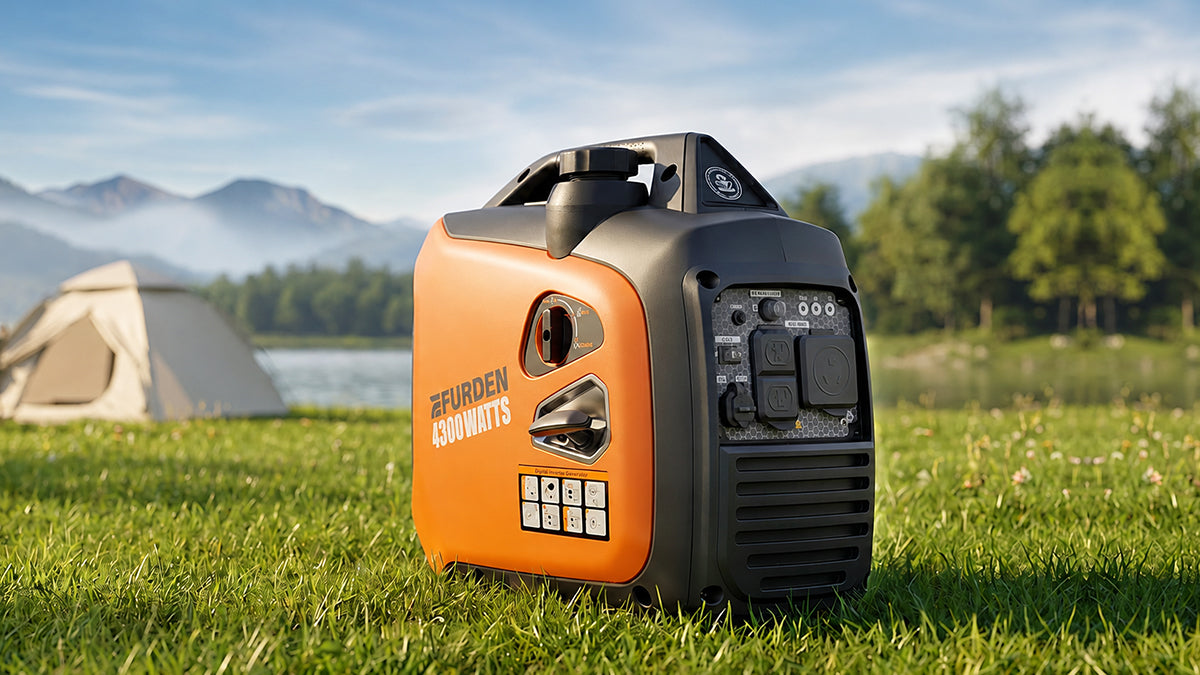
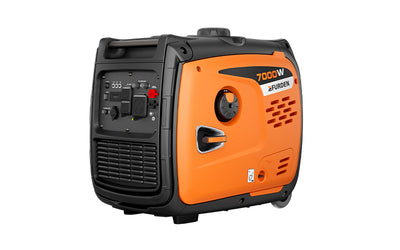
This is where Efurden flips the script. While the market average remains high, Efurden has managed to bridge the gap through direct-to-consumer efficiency. We’ve brought the 4400W Inverter Generator down to $319.
Think about that for a second: $319. This effectively eliminates the "price barrier" that has kept people using loud, bulky equipment for years. Now, the question isn't "Can I afford the inverter upgrade?" but rather: "Why would I buy a loud, 'dirty-power' traditional model when a high-wattage, clean-power inverter costs the same—or even less?" By matching the price of traditional units, we aren't just selling a generator; we're making high-end power protection accessible to everyone.

Power Limitations That Matter
Here's something that catches people off guard: inverter generators have real power constraints that traditional generators don't.
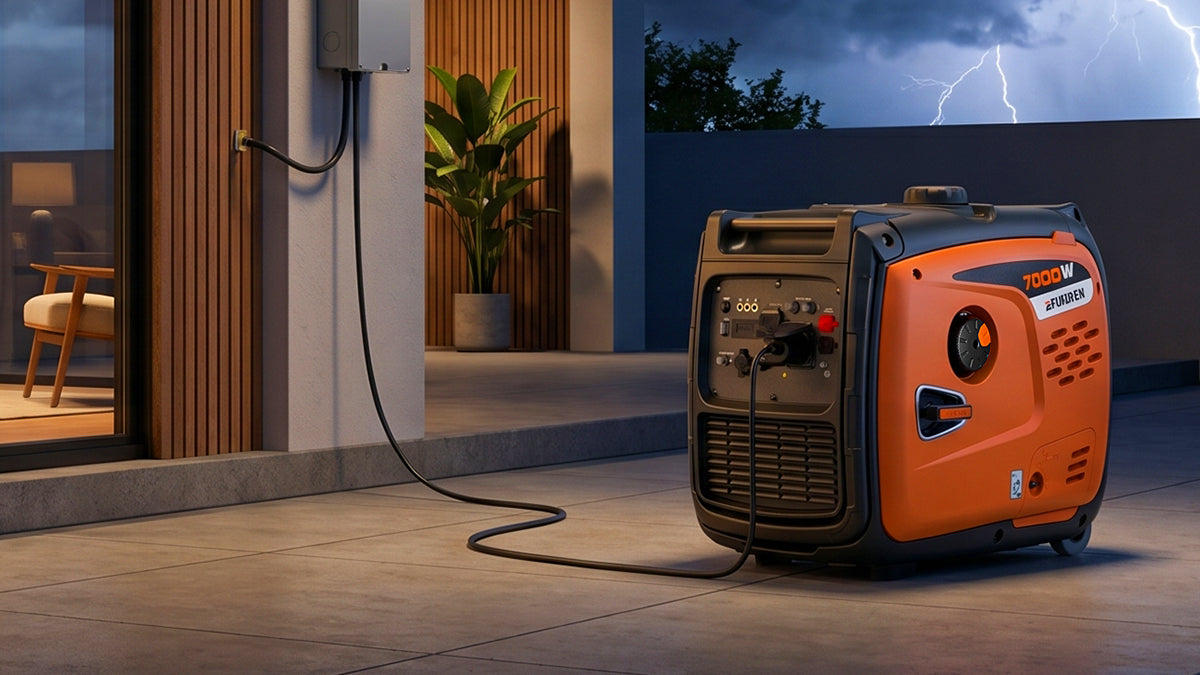
Most inverter generators max out around 4000-6500 watts of running power. That's fine for most home backup scenarios. It's fine for RVs. It's fine for camping. But if you need to run a whole-house air conditioner plus a water heater plus other appliances simultaneously? You're going to hit the ceiling fast.
And it's not just about the total wattage. It's about surge power. When an air conditioner compressor kicks on, it draws way more power for a split second than it does during normal operation. Inverter generators handle this, but they have limits. Push them too hard and they'll shut down to protect themselves. That's actually a good safety feature, but it's frustrating when you're in the middle of something.
With a traditional generator, you just... turn it on and it runs. No fancy electronics to worry about. No protection circuits that might cut power at an inconvenient moment. There's something to be said for that simplicity.
The real issue: If you're trying to power a large home during an extended outage, you might need multiple generators or a hybrid setup with batteries. That gets complicated and expensive fast.
Maintenance Complexity
Inverter generators have more moving parts. More electronics. More things that can go wrong.
A traditional generator? You change the oil, you drain the fuel before storage, you're done. Simple. An inverter generator has voltage regulators, inverter circuits, automatic chokes, and various sensors. When something breaks, it's not always obvious what went wrong. You might need a technician instead of fixing it yourself with basic tools.
I talked to a guy who spent $200 getting his inverter generator serviced for something that would've been a $30 fix on a traditional model. The technician had to run diagnostics, test circuits, the whole deal. With a traditional generator, he probably would've just replaced a spark plug and called it good.
And here's the thing nobody mentions: inverter generators are pickier about fuel. You need to use fresh gas. You need to use the right octane. You can't just throw in whatever's cheapest. With a traditional generator, that's less of an issue.
The maintenance reality: If you're mechanically inclined, you can handle most of it. If you're not, you're going to spend more on service calls. That's just how it is.
Efurden's approach: Their design prioritizes ease of maintenance. The oil change is straightforward. The fuel system is accessible. They're not trying to make it complicated. But yes, it's still more complex than a traditional generator.

Noise Isn't Always the Advantage You Think
Okay, so inverter generators are quieter. That's true. At 78 decibels, a 4400W inverter generator is noticeably quieter than a traditional generator at 95+ decibels.
But here's what I've noticed: people sometimes expect them to be silent. They're not. 78 decibels is still loud. It's about as loud as a vacuum cleaner or a lawnmower. If you're in a quiet neighborhood and you fire one up at 6 AM, your neighbors will notice.
Also, the noise profile is different. Traditional generators have that deep, rumbling sound. Inverter generators have a higher-pitched whine. Some people find the pitch more annoying than the volume. It's subjective, but it's worth knowing.
And in some situations, the noise reduction doesn't matter. If you're using it outdoors during the day, nobody cares if it's 78 or 95 decibels. You're already dealing with traffic, lawn equipment, and general outdoor noise.
When it actually matters: Late-night camping trips where you don't want to disturb other campers. RV parks with noise restrictions. Residential areas with strict noise ordinances. In those situations, the quieter operation is genuinely valuable.
The Weight and Portability Tradeoff
Inverter generators are more portable than traditional generators. That's real. A 4400W inverter generator weighs around 56 pounds. A comparable traditional generator might weigh 80+ pounds.
But here's the catch: 56 pounds is still heavy. It's not something you casually throw in your truck bed. You're not carrying it up a flight of stairs by yourself. And if you're older or have any physical limitations, that weight becomes a real problem.
I've seen people buy inverter generators thinking they'll be easy to move around. Then they realize that "portable" is relative. You still need a dolly for most situations. You still need help getting it in and out of vehicles. It's lighter than the alternative, but it's not light.
The real portability: If you need something you can genuinely carry and move easily, you're probably looking at smaller, lower-wattage models. The 4400W class is portable compared to traditional generators, but it's not exactly backpack-friendly.
Fuel Tank Size Limitations
Most inverter generators have smaller fuel tanks than traditional generators. A 4400W inverter generator typically holds 3-4 gallons. That gives you maybe 10-14 hours of runtime at half load.
For a weekend camping trip, that's fine. For a multi-day power outage, you're refueling constantly. You need to have gas on hand. You need to plan for fuel runs. It becomes a logistical thing. Traditional generators often have larger tanks and longer runtimes. If you're thinking about extended outages or off-grid situations, that matters.
The workaround: You can use extension cords and multiple fuel containers, but it adds complexity and cost.
Not Ideal for Heavy-Duty Work
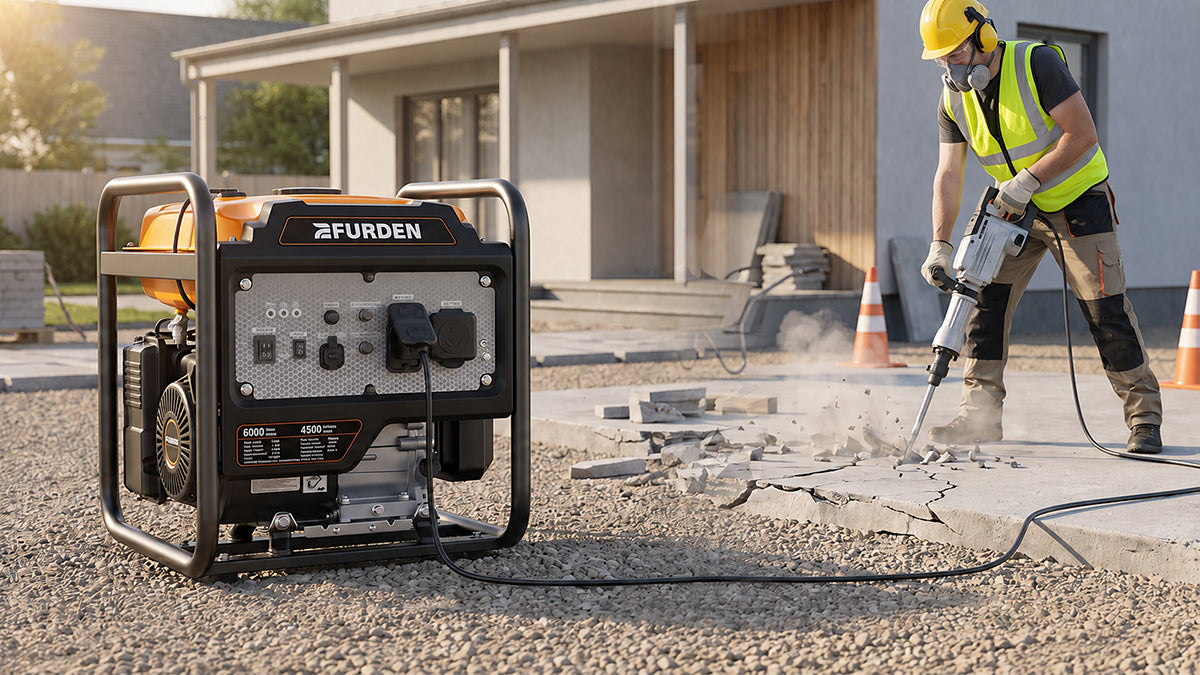
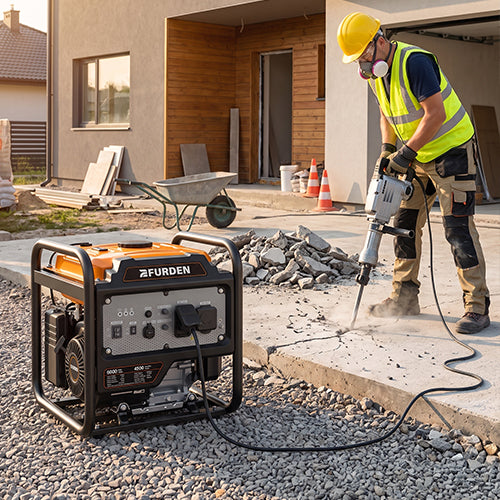
If you're running power tools on a construction site, an inverter generator might not be your best choice. The power delivery is too regulated. Some older power tools don't like the "clean" power. You might experience performance issues.
Traditional generators are more forgiving with this kind of equipment. They just deliver raw power without the fancy electronics interfering.
Who this affects: Contractors, DIYers doing serious work, anyone running older equipment. For home backup or recreational use, this isn't usually an issue.
The Parallel Connection Learning Curve
Yeah, you can connect two inverter generators together to double the power. That's cool. But it's not as simple as just plugging them in.
You need matching models. You need a parallel kit. You need to understand how to synchronize them properly. Get it wrong and you can damage both units. It's doable, but it's not intuitive. If you're not mechanically or electrically inclined, you might need professional help to set it up. That costs money.
So... Is It Worth It?
In the generator world, there’s an old rule: If you want the clean, quiet power of an inverter, you have to pay double. Efurden just broke that rule.
We’ve looked at the downsides—the complexity and the specialized maintenance. In a typical market, those might be tough pills to swallow. But when you can get an Efurden 4400W Inverter Generator for just $319—a price that is often lower than a noisy, "dirty-power" traditional generator—the conversation changes completely.

The Final Verdict:
•Don't settle for "Dirty Power": Why risk your $2,000 MacBook, high-end TV, or sensitive home appliances with a traditional unit when a pure sine wave inverter costs the same (or less)?
•Quiet & Efficient: You're essentially getting the 50-70 dB silent operation and auto-throttle fuel savings as a free upgrade compared to the old-school models.
It’s not just about "worth it" anymore. It’s about common sense. Why pay more for older, louder, and riskier technology when the future of power is already here and more affordable?
Real-World Scenarios Where Inverter Generators Struggle
Let me give you some concrete examples of situations where inverter generators aren't ideal:
•Scenario 1: Extended Whole-House Backup
If your power goes out for three days and you want to run your air conditioner, refrigerator, water heater, and other appliances simultaneously, a single 4400W inverter generator won't cut it. You'd need multiple units or a traditional generator. The fuel consumption would also be brutal.
•Scenario 2: Heavy Construction Work
You're running a circular saw, a drill, and a compressor at the same time on a job site. The power draw is erratic and heavy. An inverter generator might struggle with the surge demands.
•Scenario 3: Off-Grid Living (Long-Term)
If you're living off-grid and running a generator 6-8 hours a day to charge batteries, the maintenance and fuel costs add up. You might be better off with a larger traditional generator that requires less frequent refueling.
What People Actually Complain About (The Stuff Nobody Mentions)
After talking to dozens of inverter generator owners, here are the complaints that come up repeatedly:
•"I didn't realize how often I'd need to refuel." The smaller fuel tank means constant refueling for extended use.
•"The noise is still pretty loud." It's quieter than traditional generators, but 78 decibels is not quiet. People expect near-silent operation.
•"It won't power everything I want simultaneously." People underestimate their power needs. They think 4400W is enough for everything, then discover it's not.
•"Repair costs are higher than I expected." It’s true that inverter generators use more advanced electronics. To reduce this risk, Efurden offers solid warranty coverage for peace of mind.
•"It's heavier than I thought." 56 pounds is still heavy for many people.
•"The fuel has to be fresh." You can't just leave gas sitting for months like you can with a traditional generator.
The Bottom Line
Inverter generators are genuinely better for most modern uses. But they're not magic. They have real limitations.
The question isn't whether inverter generators are perfect. They're not. The question is whether they're the right tool for what you're actually trying to do.
If you're powering sensitive electronics, running an RV, or camping in a noise-restricted area, an inverter generator is worth it.
If you just need cheap backup power for occasional emergencies and you don't care about noise, a traditional generator might be the smarter choice.
And if you're somewhere in the middle—you want good power quality, reasonable noise levels, and solid fuel efficiency—then an inverter generator like the Efurden 4400W is worth serious consideration. At $319, it delivers on its promises without the "tech tax" of other brands. That's what matters in the end. Just honest performance that matches what you actually need.
Frequently Asked Questions
•Q: If Efurden is so much cheaper than other inverters, is the quality there?
A: Yes. The price difference comes from a direct-to-consumer model and focusing on the most popular 4400W wattage. You aren't paying for middleman markups—you're paying for the core inverter technology.
•Q: How long do inverter generators last?
A: With proper maintenance, 5-10 years is typical. They're more complex than traditional generators, so maintenance matters more.
•Q: Can I use an inverter generator for power tools?
A: Yes, but with caveats. Newer power tools work fine. Older equipment might have issues.
•Q: What's the best way to store an inverter generator?
A: Drain the fuel completely or use fuel stabilizer. Store it in a dry place. Run it monthly to keep the engine healthy.
Key Takeaways
•Inverter generators cost more upfront, but the advantages often justify the expense
•Power limitations are real—you can't run everything simultaneously
•Maintenance is more complex and repairs are more expensive
•Noise reduction is real but not miraculous—still pretty loud
•Fuel tank size means frequent refueling for extended use
•Not ideal for heavy-duty construction work or older equipment
•The parallel connection capability is useful but requires proper setup
•For most modern uses (RVs, camping, home backup), the benefits outweigh the drawbacks
The Efurden 4400W inverter generator is honest about its capabilities and limitations. It's not trying to be everything to everyone. It's a solid, reliable option for people who understand what they're getting and why they need it.
That's the real test: do you actually need what an inverter generator offers? If yes, it's worth the investment. If no, save your money and get a traditional generator.

3 Comments
Please read this before you buy any Efurden power products.
today is July 5, 2026.
The phone listed here for support. Is a Manhattan NYC cell phone. Always busy or All circuits are busy. At night you get the standard cell phone leave a message. This is a burner phone. No one calls you back. If you email with questions about Warranty service. You will never be contacted back. Chat works sporadically. 1,2,3 days someone chats back. After proof of purchase, screen shot. This will be sent to the appropriate Dept. Do not hold your breath. They will eventually respond email support if you threaten to make complaints. In my case.Out of Stock ? On the ignition coil. The offered full purchase price refund. Then cannot process this. Over 90 days from purchase. Go to Temmu make refund request. after 15 emails back and forth.I was offered 79.95. Purchase price 285.00. Still nothing.
The only Warranty Efurden Shenzen honors is the Platform Warranty. ebay,Amazon 30 days Temmu 90 days.
The warranty stated here on this Web Site. Is a complete FRAUD. Do not buy there power products.
Okay. My unit is still under warranty. Bought June 18. The Warranty phone number 332-258-6131. Even late at night
All circuits are busy. Try again later.
D day is Monday afternoon. TikTok .Quora. Facebook you name it. Copy and paste posts
What about a simple part. The Ignition Coil. WHERE do I get it ? 1100 hrs of use. EDOG4
When will you contact me ? Maybe after I begin posting all over the Internet my experience ?