







How Much Power Do You Actually Need? Home Generator Power Calculation Guide
11 Jan 2026
0 Comments
Here's the mistake most people make when buying a generator: they guess.
They look at their electric bill, see they use 30 kilowatt-hours per day, and think they need a 30,000-watt generator. Or they just pick whatever their neighbor has. Or they buy the biggest one they can afford, assuming more power is always better.
Then they get it home and realize they either overpaid for capacity they'll never use, or they underbought and can't run what they actually need.
The truth is simpler than you think. You don't need to run everything in your house simultaneously. You need to run the things that matter most. And figuring out what that actually is takes about 30 minutes of honest thinking.
Let me walk you through it.

The Fundamental Misunderstanding About Home Power
Your house doesn't use power the same way all day. Your peak demand—the moment when everything draws power at once—is completely different from your average daily usage.

Here's a real example. Let's say your electric bill shows you use 30 kilowatt-hours per day. That sounds like you need 30,000 watts. But that's spread across 24 hours. Your actual peak demand—the moment when the air conditioner, water heater, dryer, and other appliances are all running—might only be 15,000-20,000 watts.
And here's the key insight: you're never actually running everything simultaneously.
The air conditioner doesn't run while the dryer is going. The oven isn't on when the water heater is heating. The furnace blower doesn't kick on while you're cooking dinner. Life doesn't work that way.
Your generator needs to handle your realistic simultaneous load, not your theoretical peak load.
Step 1: List Everything You Want to Run
Don't overthink this. Just write down every device you want to power during an outage.
Start with the essentials:
•Refrigerator
•Freezer
•Lights
•Water heater
•Well pump (if applicable)
•Furnace blower
Then add the comfort items:
•TV
•Microwave
•Coffee maker
•Phone chargers
•Laptop charger
•Bathroom outlets
Then the nice-to-haves:
•Air conditioner
•Dryer
•Electric oven
•Dishwasher
•Washing machine
Don't worry about whether you'll actually run all of them. Just list everything you might want.
Step 2: Find the Wattage for Each Device

This is where most people get stuck. They don't know how many watts their refrigerator uses.
Here's how to find it:
Check the nameplate. Every appliance has a label somewhere that shows the wattage or amperage. It's usually on the back or bottom.
If it shows wattage, great. Write that number down.
If it shows amperage, multiply by 120 (for standard 120V household devices) to get watts.
Example: A device rated at 10 amps = 10 × 120 = 1,200 watts
If you can't find the nameplate, use these typical ranges:
|
Appliance
|
Typical Wattage (W)
|
|
Refrigerator
|
600-800
|
|
Freezer
|
600-800
|
|
Lights (per room)
|
100-200
|
|
TV
|
200-400
|
|
Microwave
|
1,000-1,200
|
|
Coffee maker
|
800-1,200
|
|
Water heater
|
4,000-5,500
|
|
Furnace blower
|
400-600
|
|
Well pump
|
800-1,500
|
|
Air conditioner
|
3,500-5,000
|
|
Electric dryer
|
3,000-5,000
|
|
Electric oven
|
2,000-5,000
|
|
Dishwasher
|
1,800-2,400
|
|
Washing machine
|
500-1,000
|
|
Phone charger
|
10-30
|
|
Laptop charger
|
50-100
|
The key thing to remember: these are running wattages, not surge wattages. Motors and compressors draw extra power when they start. We'll account for that later.
Step 3: Determine What Actually Runs Simultaneously

This is the crucial step that most people skip.
You're not adding up all the wattages. You're figuring out what realistically runs at the same time.
Let me give you a concrete example.
Scenario: You want to maintain comfort during a summer power outage.
Your list includes:
•Refrigerator: 600W
•Freezer: 600W
•Lights (5 rooms): 500W
•Water heater: 4,500W
•Air conditioner: 3,500W
•Microwave: 1,200W
•TV: 300W
•Well pump: 1,000W
•Furnace blower: 500W
•Phone chargers: 100W
Total if everything ran: 12,800W
But here's what actually happens during an outage:
•The refrigerator runs constantly: 600W
•You have lights on in maybe 2-3 rooms: 300W
•The TV is on: 300W
•You make coffee in the morning: 1,200W (but only for 10 minutes)
•You want the AC running: 3,500W
•The water heater heats occasionally: 4,500W (but not continuously)
The question: Do you run the water heater while the AC is on? Do you make coffee while the AC is running? Do you use the microwave while the AC is running?
Probably not all at once. You're managing usage. You're being intentional about what you run when.
So your realistic simultaneous load might be:
•Refrigerator: 600W (always)
•Lights: 300W (typical)
•TV: 300W (typical)
•Air conditioner: 3,500W (running)
•Total realistic simultaneous: 4,700W
Not 12,800W. 4,700W.
That's the number that matters.
Step 4: Add 20% for Surge Power
When motors start, they draw extra power momentarily. Your refrigerator compressor might draw 2,000W for a second when it kicks on, then settle to 600W during normal operation.
Your generator needs to handle these surges.
Add 20% to your realistic simultaneous load to account for this.

Example calculation:
•Realistic simultaneous load: 4,700W
•Surge buffer (20%): 940W
•Total needed: 5,640W
Step 5: Choose Your Generator Size

Now you know what you actually need.
If your calculation is:
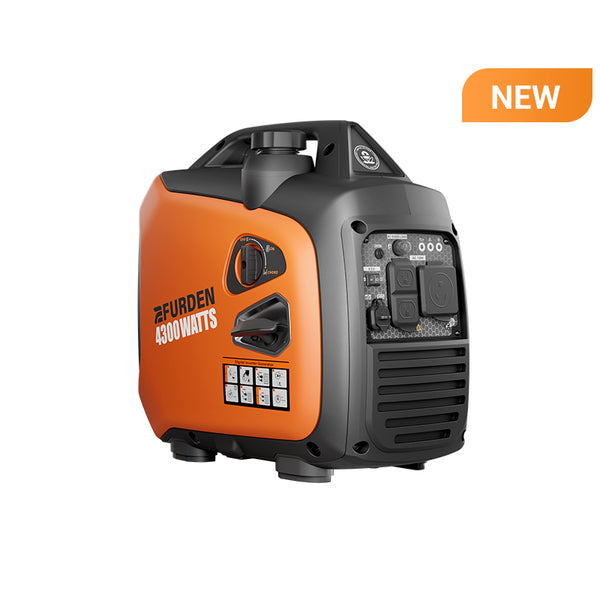
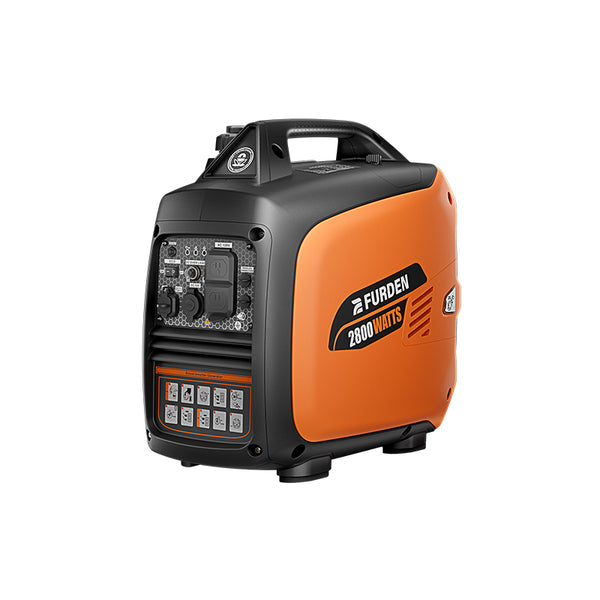
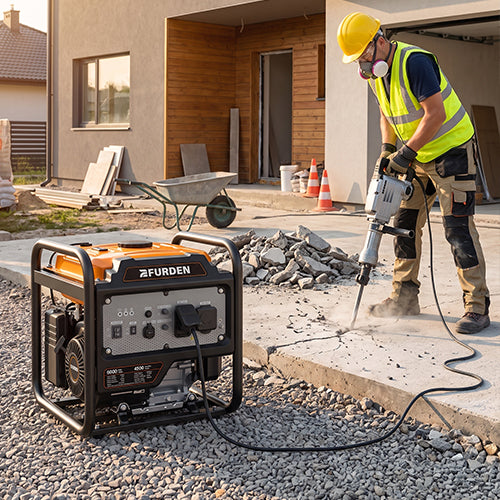
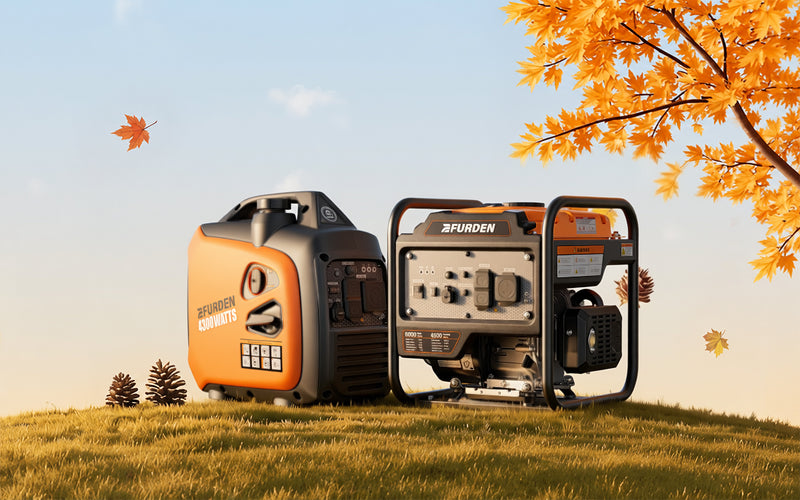
•Under 3,500W: A 3,000-4,000W generator handles it. We recommend the Efurden 2500W Portable Quiet Gas Inverter Generator (2500W mode), which easily meets basic needs while providing quiet operation.
•3,500W - 5,500W: A 4,400-5,500W generator is ideal (this is where most homes land).
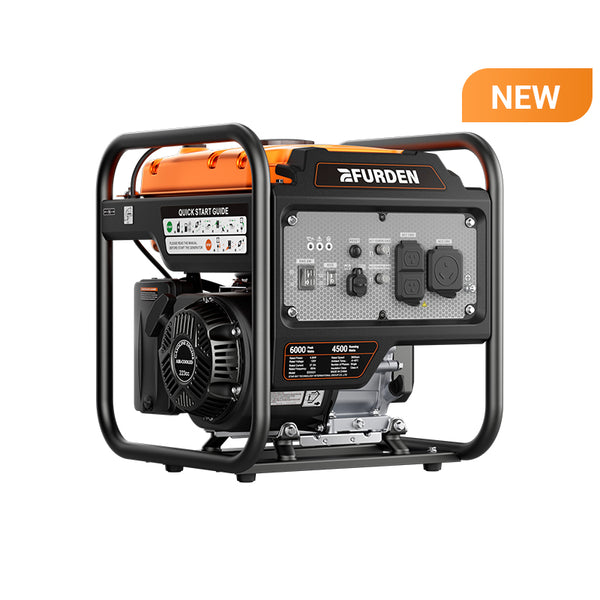
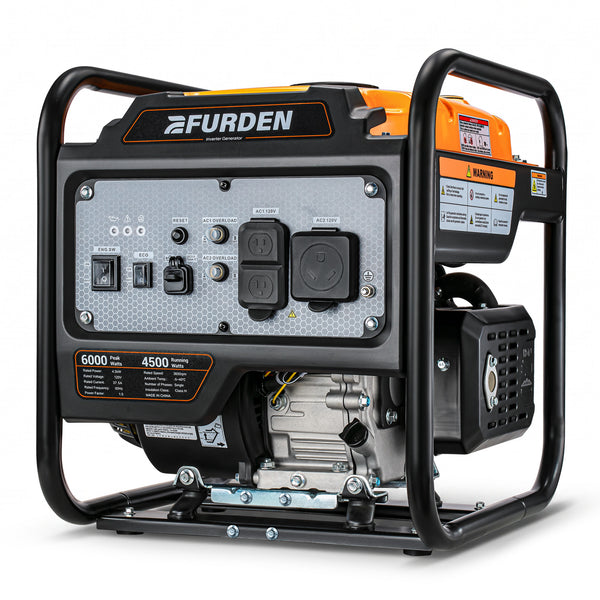
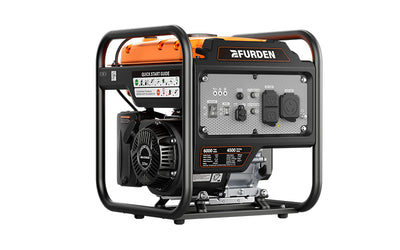
•For users needing a balance of power and portability, the Efurden 4000W/4400W Portable Gas Inverter Generator is an excellent open-frame option.
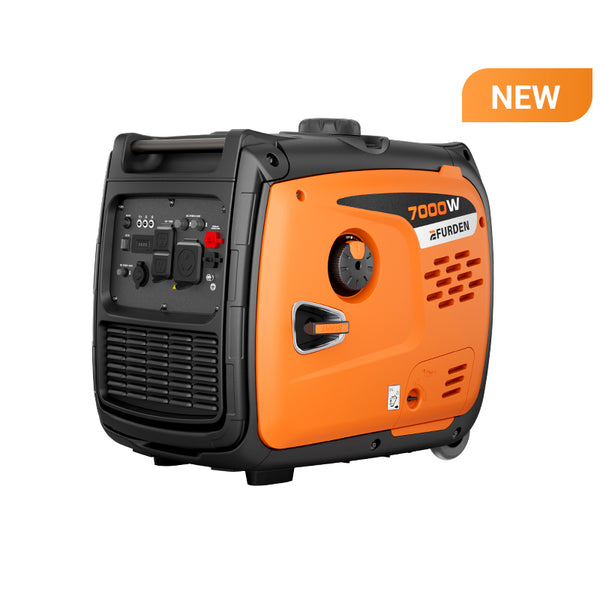
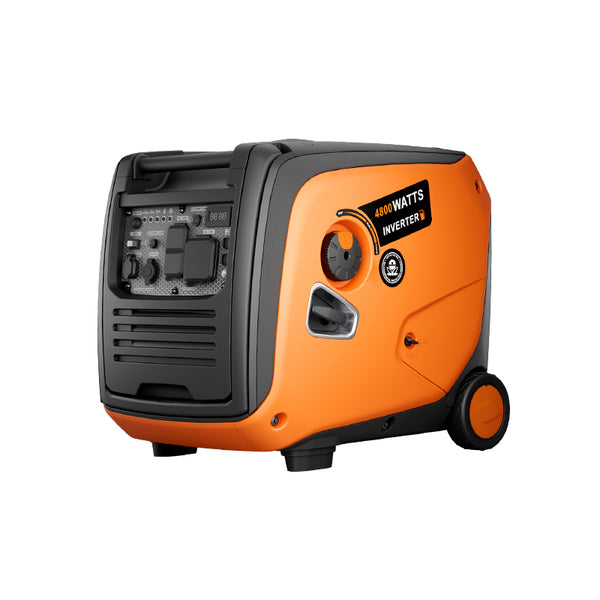
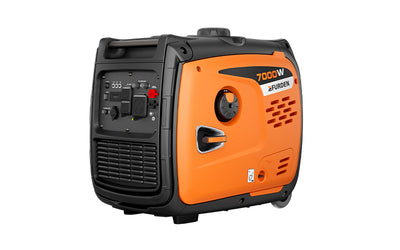
•If you prioritize quiet operation and longer run times, the Efurden 4800W Portable Quiet Gas Inverter Generator (4800W mode) is your best choice.
•5,500W - 8,000W: A 6,500W+ generator can provide ample power. In this case, the Efurden 4800W Portable Quiet Gas Inverter Generator (4800W mode) can serve as a backup, but if your peak load approaches or exceeds 5500W, we recommend considering a higher wattage model to ensure sufficient headroom.
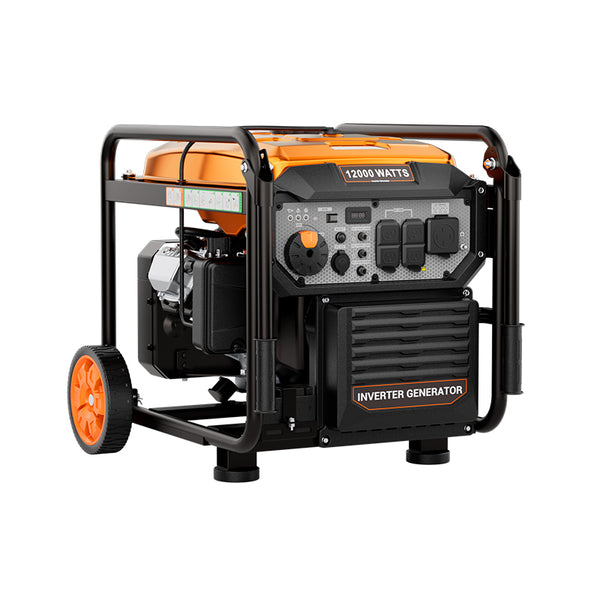
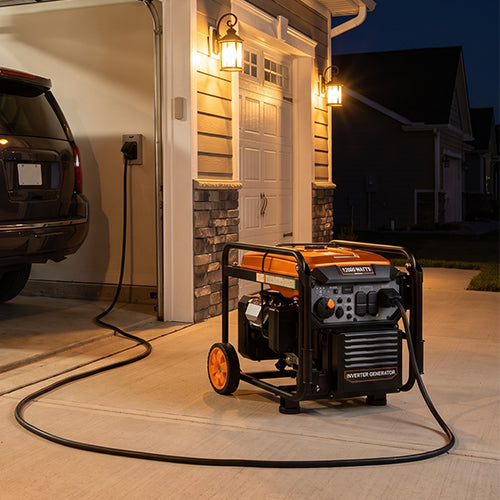
•Over 8,000W: You may need multiple units or a whole-house standby generator. For high-power demands, the Efurden 12000W Gas Inverter Generator, with its powerful output and eco-mode, is your ideal solution for extreme power needs.
The sweet spot for most homes: 4,400W - 5,500W
This is why the Efurden 4000W/4400W and Efurden 4800W models are so popular. They handle the realistic power needs of most homes without overkill or undersizing.
Real Scenarios: What This Looks Like in Practice
Let me show you three actual examples so you can see how this works.
Scenario 1: The Martinez Family (Winter Outage, Well Water)

Their situation: They live in a rural area with a well pump. Winter power outage. They need heat and water.
Their device list:
•Well pump: 1,000W
•Furnace blower: 500W
•Lights: 400W
•Water heater: 4,500W
•Refrigerator: 600W
•Microwave: 1,200W
•Phone chargers: 100W
Their realistic simultaneous load:
•Well pump (occasional): 1,000W
•Furnace blower (occasional): 500W
•Lights: 400W
•Refrigerator: 600W
•Total: 2,500W
(They're not running water heater and microwave simultaneously with everything else)
With 20% surge buffer: 2,500W × 1.20 = 3,000W
Their generator choice:
For the Martinez family, the Efurden 2500W Portable Quiet Gas Inverter Generator (2500W mode) is a very suitable choice, capable of meeting their basic needs. If they desire more headroom for potential future device additions, the Efurden 4000W/4400W Portable Gas Inverter Generator is also an excellent upgrade option.
Result: The Efurden 2500W model perfectly meets their minimum needs, while the 4000W/4400W model offers greater flexibility, ensuring they are comfortable and prepared.
Scenario 2: The Chen Family (Summer Outage, AC Dependent)

Their situation: They live in a hot climate. Summer power outage. They want AC.
Their device list:
•Air conditioner: 3,500W
•Refrigerator: 600W
•Lights: 500W
•TV: 300W
•Microwave: 1,200W
•Water heater: 4,500W
•Furnace blower: 500W
Their realistic simultaneous load:
•Air conditioner: 3,500W (running)
•Refrigerator: 600W (always on)
•Lights: 500W (typical)
•TV: 300W (typical)
•Total: 4,900W
(They're not running water heater or microwave while AC is on)
With 20% surge buffer: 4,900W × 1.20 = 5,880W
Their generator choice:
For the Chen family, a generator of at least 6,500W is needed to comfortably run the AC and other essentials. In this scenario, the Efurden 4800W Portable Quiet Gas Inverter Generator (4800W mode) might be slightly insufficient. We strongly recommend the Efurden 12000W Gas Inverter Generator, which provides ample power to ensure stable operation of the AC and other high-power devices, offering a worry-free summer experience.
Result: The Efurden 12000W model can easily handle their needs, ensuring comfort even in hot weather.
Scenario 3: The Johnson Family (Suburban, Minimal Needs)
Their situation: They just want to keep essentials running. Not concerned about comfort.
Their device list:
•Refrigerator: 600W
•Lights: 300W
•Water heater: 4,500W
•Furnace blower: 500W
•Phone chargers: 100W
Their realistic simultaneous load:
•Refrigerator: 600W (always)
•Lights: 300W (typical)
•Furnace blower: 500W (occasional)
•Total: 1,400W
(Water heater isn't running constantly)
With 20% surge buffer: 1,400W × 1.20 = 1,680W
Their generator choice:
For the Johnson family, a 3,000-4,000W generator is sufficient. We recommend the Efurden 2500W Portable Quiet Gas Inverter Generator (2500W mode), which can meet their basic needs more economically, avoiding unnecessary capacity costs.
Result: The Efurden 2500W model is their most cost-effective choice, perfectly matching their minimum needs.
The Common Mistakes People Make
After talking to hundreds of people about their generator purchases, I see the same mistakes repeatedly.
Mistake #1: Calculating daily usage instead of peak load
They see their electric bill shows 30 kWh per day and think they need 30,000W. That's not how it works. Your peak load is what matters, not your daily average.
Mistake #2: Adding up all wattages without considering simultaneous usage
They list every device and add them all together. Then they're shocked when they realize they don't actually run everything at once.
Mistake #3: Forgetting surge power
They calculate their load at 4,000W, then buy a 4,000W generator. But when the air conditioner compressor kicks on, it draws 5,000W for a moment and the generator shuts down.
Mistake #4: Not accounting for future needs
They buy the minimum they need today, then regret it when their situation changes (they get a hot tub, add a workshop, etc.).
Mistake #5: Buying based on price instead of actual needs
They see a 6,500W generator on sale and buy it, even though they only need 4,400W. They're paying for power they'll never use.
The Installation Reality
Okay, you've calculated your power needs. Now you need to actually connect the generator to your house.
You have three options, each with different complexity and cost.
Option 1: Extension Cords (Cheapest)
You run heavy-duty extension cords from the generator to the devices you want to power. Plug devices directly into the cords.
•Cost: $50-100
•Setup time: 5 minutes
•Flexibility: High (you can move things around)
•Limitations: Limited reach, manual switching
Option 2: Manual Transfer Switch (Better)
You install a transfer switch in your electrical panel. When power goes out, you manually switch from grid to generator. The generator powers selected circuits.
•Cost: $500-1,500 (includes electrician labor)
•Setup time: 2-4 hours (professional installation)
•Flexibility: Medium (circuits are pre-selected)
•Limitations: Manual switching required
Option 3: Automatic Transfer Switch (Best)
An automatic switch detects power loss, starts the generator, and switches power automatically. Seamless transition.
•Cost: $2,000-5,000+ (includes electrician labor)
•Setup time: 4-8 hours (professional installation)
•Flexibility: Low (circuits are pre-selected)
•Limitations: Most expensive option
For most people: Option 2 (manual transfer switch) is the practical choice. It's safe, permanent, and reasonably priced.
The Decision Framework
Here's how to actually make your decision:
1.Calculate your realistic simultaneous load (using the method above)
2.Add 20% for surge power
3.Choose a generator that handles that load comfortably (ideally 20-30% headroom)
4.Consider your specific situation:
•Do you have a well pump? (adds 800-1,500W)
•Do you want AC? (adds 3,500-5,000W)
•Do you have electric heat? (adds complexity)
•How long do you expect to run it? (affects fuel consumption)
5.Make your choice
Most people end up with a 4,400-5,500W generator. It's the sweet spot for realistic home backup power.
The Efurden 4000W/4400W and Efurden 4800W models are popular for exactly this reason. They handle what most homes actually need without oversizing or undersizing.
The Bottom Line
Your generator doesn't need to run your entire house. It needs to run the things that matter to you during an outage.
Figuring out what that actually is takes honest thinking about your priorities. Do you want to maintain comfort (AC, hot water)? Or just survive (refrigerator, lights, heat)?
Once you know that, the math is simple. Calculate your realistic simultaneous load, add 20% for surge power, and choose a generator that handles it.
Don't guess. Don't buy based on price alone. Don't assume bigger is always better.
Calculate. Decide. Choose.
That's how you end up with the right generator for your actual needs.
Frequently Asked Questions
Q: Can I calculate power needs from my electric bill?
A: Not directly. Your bill shows daily usage spread across 24 hours. Your peak load is what matters, not your daily average. You need to calculate based on what runs simultaneously, not your total consumption.
Q: What if I don't know the wattage of my devices?
A: Check the nameplate on the device. If it shows amperage, multiply by 120V. If you can't find the nameplate, use the typical ranges provided in this guide.
Q: Should I add extra capacity for future needs?
A: Maybe. If you think your needs will change (adding a hot tub, workshop, etc.), buying 20-30% more capacity makes sense. But don't buy 50% more just in case.
Q: What about starting surge power?
A: Motors draw extra power when starting. A refrigerator compressor might draw 2,000W for a second, then 600W during normal operation. Add 20% to your calculated load to account for this.
Q: Is 4,400W enough for a family of four?
A: Depends on what you want to run. For essentials plus comfort (hot water, TV, cooking), yes. For AC plus everything else, no. Calculate your specific needs.
Q: Do I need a transfer switch?
A: For safety and convenience, yes. It prevents backfeeding (dangerous for utility workers) and lets you power multiple circuits safely. Cost is $500-1,500 installed.
Q: Can I run my air conditioner on a 4,400W generator?
A: Yes, but not much else simultaneously. An AC draws 3,500-5,000W. A 4,400W generator can run it, but not the water heater, dryer, or other high-power devices at the same time.
Q: What's the difference between running wattage and surge wattage?
A: Running wattage is what a device uses during normal operation. Surge wattage is the extra power it draws when starting (usually 2-3x higher). Your generator needs to handle both.
Q: How long can I run a generator continuously?
A: Most portable generators are designed for 8-12 hours of continuous operation. After that, let them cool down. You can run them 24/7, but you need to manage maintenance and fuel.
Q: What if my calculated load is between two generator sizes?
A: Choose the larger size. You want 20-30% headroom above your calculated load. This prevents the generator from shutting down when surge power kicks in.
Key Takeaways

•Your peak simultaneous load determines your generator size, not your daily average usage.
•Most homes need 4,000-6,500W for realistic backup power.
•Calculate your realistic simultaneous load, not theoretical peak load.
•Add 20% for surge power when motors start.
•Don't buy based on price alone—calculate your actual needs.
•A 4,400W generator is the sweet spot for most homes.
•Install a manual transfer switch for safety and convenience.
•Consider your specific situation (well pump, AC, electric heat, etc.).
Efurden's 4000W/4400W and 4800W models meet the power needs of most homes. They are not the cheapest or most powerful options, but they are perfectly sized for what most people actually need during an outage.
That's the key: right-sizing. Not oversizing, not undersizing. Just the right amount of power for your actual situation.