







How Long Will an Inverter Generator Last? Lifespan & How to Extend It
13 Mar 2026
The Question Every Generator Owner Asks
You just bought an inverter generator. It cost $500-$1,500. You want it to last.
But how long will it actually last?
The honest answer: 5-10 years with poor maintenance. 15-20+ years with proper care.
That's a huge difference. And it all comes down to how you treat your generator.
The Average Inverter Generator Lifespan

Most inverter generators are designed to last 1,000-2,000 operating hours.
Let's translate that:
Light Use (occasional camping, backup power):
•50 hours per year = 20-40 years of life
•Reality: 10-15 years (other factors wear it out)
Moderate Use (monthly backup power, regular camping):
•200 hours per year = 5-10 years of life
•Reality: 8-12 years with maintenance
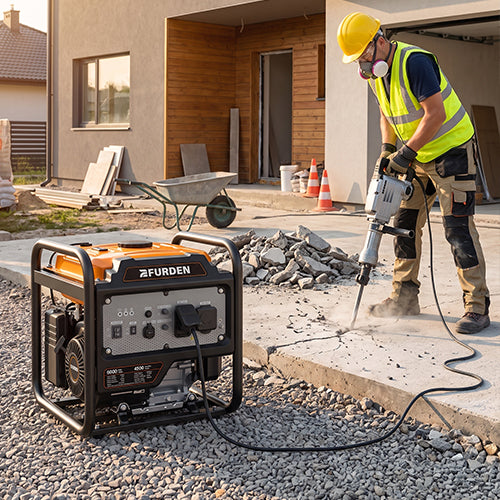
Heavy Use (construction site, frequent events):
•500+ hours per year = 2-4 years of life
•Reality: 3-5 years even with maintenance
Continuous Use (emergency power, off-grid living):
•1,000+ hours per year = 1-2 years of life
•Reality: 2-3 years maximum
The key insight: Operating hours matter more than calendar years.
A generator sitting in your garage for 10 years might have only 100 operating hours. It could still run fine. But a generator running 2 hours every day for 5 years has 3,650 operating hours. It's near the end of its life.
What Kills Generators Early?
Most generators don't fail because they're defective. They fail because of how they're used and maintained. Use our Generator Wattage Sizing Calculator to ensure you have the right size for your needs.
The #1 Killer: Stale Fuel
Gasoline degrades. After 30 days, it starts breaking down. After 90 days, it's basically useless.
Stale fuel leaves varnish and gum in your carburetor. This clogs the jets. Your generator won't start. Or it starts but runs rough.
The damage: Carburetor replacement costs $200-$400. Preventable with fuel stabilizer.
The #2 Killer: Dirty Oil
Your generator's engine is like a car engine. It needs clean oil.
Dirty oil causes:
•Increased friction and wear
•Sludge buildup
•Bearing damage
•Premature engine failure
The damage: Engine replacement costs $500-$1,000+. Preventable with regular oil changes. Check your Efurden generator's manual for specific oil change intervals.
The #3 Killer: Lack of Maintenance
Generators need regular attention:
•Oil changes (every 50-100 hours)
•Air filter cleaning (every 100 hours)
•Spark plug inspection (every 100 hours)
•Fuel system maintenance (every 6 months)
Skip these, and your generator dies young.
The #4 Killer: Overloading
Running your generator at 100% load continuously stresses the engine. It runs hotter. Parts wear faster. Use our Generator Wattage Sizing Calculator to ensure you're not overloading your unit.
The damage: Overheating causes:
•Voltage regulation failure
•Bearing wear
•Premature engine shutdown
•Shortened lifespan by 50%+
The #5 Killer: Improper Storage
Storing your generator in a damp basement or hot garage accelerates rust and corrosion.
The damage:
•Rust on fuel tank and engine
•Corroded electrical connections
•Moisture in the carburetor
•Fuel system damage
The Maintenance Schedule That Extends Life
Follow this schedule, and your generator will last 15-20+ years.
Before First Use
Read the manual completely
Check oil level (should be full)
Inspect all connections
Run for 10 minutes to break in
Let cool before storing
Every 5-10 Operating Hours (Monthly for Most Users)
Check oil level
Inspect for fuel leaks
Listen for unusual sounds
Check that all bolts are tight
Every 50-100 Operating Hours (Every 6 Months)
Change engine oil and oil filter
Clean or replace air filter
Inspect spark plug
Check fuel for degradation
Run under load for 15 minutes
Every 200-250 Operating Hours (Annually)
Replace spark plug
Deep clean air filter or replace
Inspect fuel lines for cracks
Check carburetor for varnish
Inspect all external connections
Run full load test
Before Winter Storage (If Not Using in Winter)
Drain fuel tank completely OR add fuel stabilizer
Change to winter oil (5W-30)
Clean air filter
Replace spark plug if needed
Store in dry location
Before Summer Use (If Stored in Winter)
Change back to summer oil (10W-40)
Replace spark plug
Clean air filter
Add fresh fuel
Run for 15 minutes before use
Oil Changes: The Most Important Maintenance
Oil is your generator's lifeblood. Change it regularly.
How Often to Change Oil
|
Usage Level
|
Oil Change Interval
|
|
Light (50 hrs/year)
|
Every 6 months or 100 hours
|
|
Moderate (200 hrs/year)
|
Every 3 months or 50 hours
|
|
Heavy (500+ hrs/year)
|
Every month or 25 hours
|
How to Change Oil
What you need:
•Correct oil type (check manual)
•Oil drain pan
•Socket wrench
•Oil filter wrench (if applicable)
•Rags or paper towels
Steps:
1.Run generator for 5 minutes to warm oil
2.Let cool for 10 minutes
3.Remove drain plug and drain old oil
4.Replace oil filter (if equipped)
5.Fill with new oil to correct level
6.Check level with dipstick
7.Run for 2 minutes and recheck level
Cost: $15-30 per oil change
Time: 15 minutes
Impact: Extends engine life by 50%+
Fuel System Maintenance
Stale fuel is the #1 cause of generator failure. Prevent it.
Use Fuel Stabilizer
Add fuel stabilizer (Sta-Bil) to every tank of fuel:
•Keeps fuel fresh for 12+ months
•Prevents carburetor gum
•Costs $8-12 per bottle
•Lasts for 10+ tanks
Drain or Stabilize Before Storage
If storing for 3+ months:
Option 1 - Drain the tank:
1.Run generator until fuel tank is empty
2.Pull the cord 10 times to clear fuel lines
3.Store with empty tank
Option 2 - Stabilize the fuel:
1.Add fuel stabilizer to tank
2.Run generator for 15 minutes to circulate stabilized fuel
3.Store with fuel in tank
Option 2 is easier and works better.
Run Monthly During Off-Season
Even if you're not using your generator, run it monthly:
•15 minutes at no load
•5 minutes under load
•Keeps fuel fresh
•Keeps engine seals lubricated
•Prevents carburetor gum

Storage: Protecting Your Investment
Where and how you store your generator affects its lifespan.
Best Storage Conditions
•Temperature: 40-80°F (avoid extreme heat and cold)
•Humidity: Dry location (not basement or garage)
•Protection: Covered to prevent dust
•Ventilation: Good airflow (prevents moisture)
•Safety: Away from children and pets
Storage Setup
1.Clean the generator before storing
2.Drain or stabilize fuel (see fuel section)
3.Change to winter oil if storing in cold climate
4.Cover with tarp (but allow airflow)
5.Store away from heat sources (furnace, water heater)
6.Keep battery charged (if electric start model)
7.Document storage date for maintenance tracking
Pre-Storage Checklist
Change oil
Add fuel stabilizer or drain tank
Clean air filter
Inspect spark plug
Check all connections
Document operating hours
Take photos for insurance
Signs Your Generator Is Aging
Even with perfect maintenance, generators eventually wear out. Watch for these signs:
|
Sign
|
What It Means
|
Action
|
|
Hard to start
|
Carburetor gum or weak spark
|
Clean carburetor or replace spark plug
|
|
Rough idle
|
Dirty fuel or weak spark
|
Change fuel and spark plug
|
|
Reduced power output
|
Worn engine or carburetor issue
|
Service engine or replace
|
|
Excessive smoke
|
Burning oil or fuel leak
|
Check oil level and fuel lines
|
|
Unusual noise
|
Internal wear or loose bolts
|
Tighten bolts or service engine
|
|
Fuel leaks
|
Cracked fuel line or tank
|
Replace fuel line or tank
|
|
Won't hold charge (electric start)
|
Battery failure
|
Replace battery
|
When to Replace vs. Repair
Replace if:
•Engine won't start after all troubleshooting
•Major internal damage (cracked block, bearing failure)
•Repair cost exceeds 50% of replacement cost
•Generator is 15+ years old with heavy use
Repair if:
•Carburetor issues (usually $200-400)
•Fuel line or filter problems (usually $50-150)
•Spark plug or air filter (usually $20-50)
•Voltage regulator failure (usually $150-300)
•Generator is less than 10 years old
Real-World Lifespan Examples
Example 1: Light Use (Best Case)
•Usage: Occasional camping, emergency backup
•Hours per year: 50 hours
•Maintenance: Follows schedule perfectly
•Storage: Dry garage, proper conditions
•Result: 20+ years of reliable service
•Total operating hours: 1,000+ hours
Example 2: Moderate Use (Typical)
•Usage: Monthly backup power, regular camping
•Hours per year: 200 hours
•Maintenance: Regular oil changes, fuel stabilizer
•Storage: Garage, some moisture
•Result: 12-15 years of service
•Total operating hours: 2,400-3,000 hours
Example 3: Heavy Use (Worst Case)
•Usage: Construction site, frequent events
•Hours per year: 500+ hours
•Maintenance: Basic maintenance only
•Storage: Outdoor, exposed to weather
•Result: 3-5 years before major repair needed
•Total operating hours: 1,500-2,500 hours
Extending Your Generator's Life: The Bottom Line
Your generator's lifespan depends on three things:
1.How much you use it (operating hours matter most)
2.How well you maintain it (oil changes, fuel care)
3.How well you store it (dry, protected location)
The formula for 15-20+ years of life:
•Change oil every 50-100 hours
•Use fuel stabilizer every time you fuel up
•Run monthly even during off-season
•Store in dry, protected location
•Address problems immediately
Do these four things, and your generator will outlast your expectations.
Next Steps
1.Check your current maintenance schedule - Are you following the intervals above?
2.Schedule your next oil change - Mark it on your calendar
3.Stock fuel stabilizer - Buy a bottle now
4.Plan your storage - Ensure proper conditions
5.Read your generator manual - Manufacturer recommendations are important
Your generator is an investment. Treat it right, and it will protect your family for decades. Explore Efurden's reliable inverter generators built for long-term performance and durability.